




by Alfredo Galindo
In the last 30 years we´ve seen the film careers of Mexican actresses such as Salma Hayek, Eiza González and Melissa Barrera, among others, blossom and embrace a new generation of American moviegoers in a way it didn’t happen for decades. In fact, when Salma Hayek made her breakthrough entrance alongside Antonio Banderas in the now cult classic “Desperado” (Robert Rodriguez, 1995), critics of the time didn’t have a clear previous reference from a Mexican star only going back to Dolores del Río, who had a meteoric career in the 1920s/1930s Hollywood. By the time Eiza and Melissa came into the scene no Dolores mention came through. No need if we already have Salma.
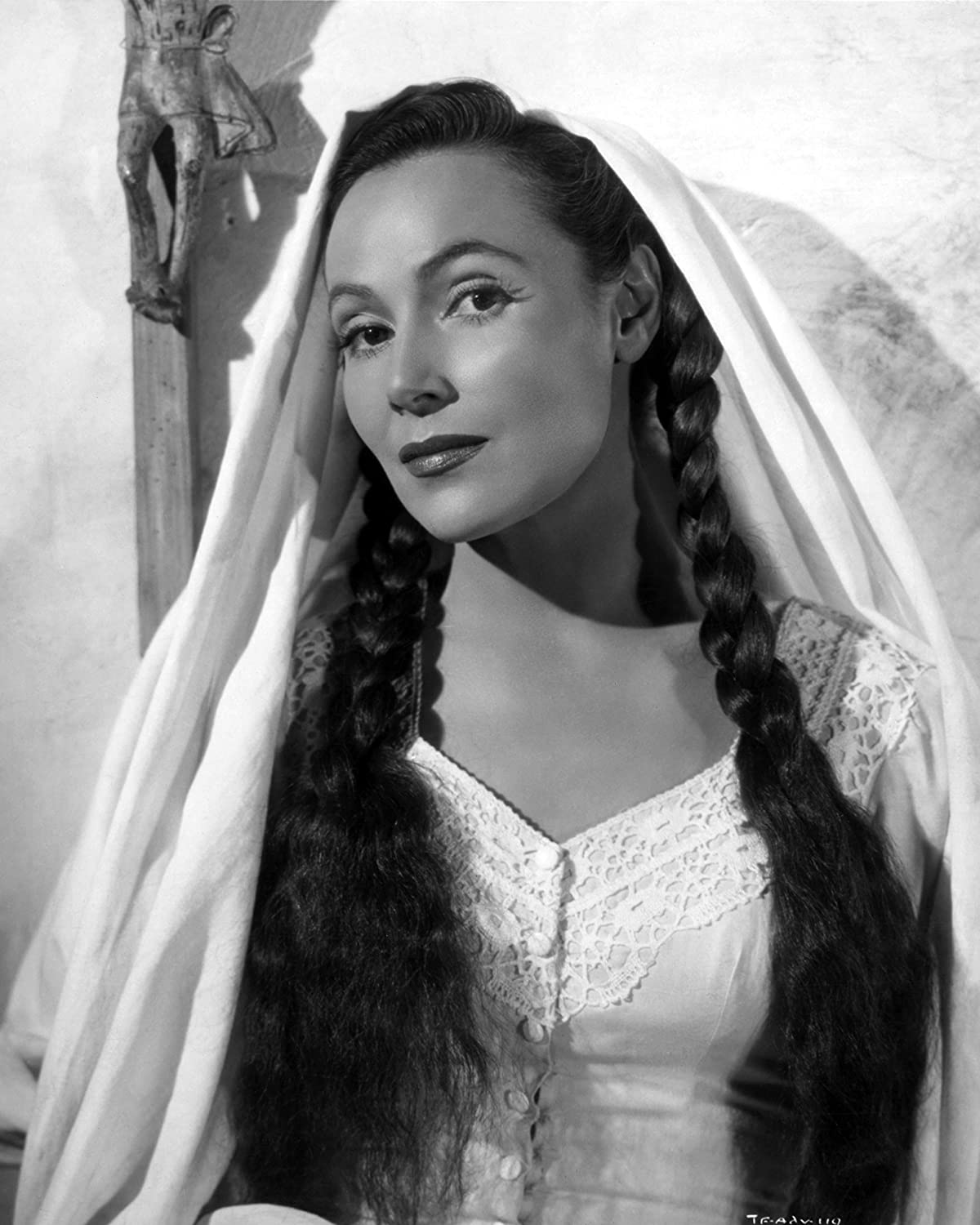
August 3rd marked the 120th birthday anniversary of Dolores del Rio, the first Mexican female movie star with international appeal. Born on Durango, Mexico, to a pre-Revolutionary aristocratic family as Dolores Asúnsolo y López Negrete she was considered, for that, like “a little Princess, who would marry her Prince and lived happily ever after”,
That prince came in the persona of Mexican wealthy man Jaime del Río, who Dolores married on April 11, 1921, being Dolores merely a sweet Sixteen at the time, so when Hollywood producer Edwards Care we met the couple by chance in Mexico City in the mid 20’s, Dolores didn´t hesitate when she was told she had the beauty to fill the big screen, the couple established in Los Angeles, Jaime taking in 1926 a $40 a week-job as a script clerk with First National Studios because he wanted ri learn the movie business from the ground up while Dolores, after starring in Edward Carewe´s “Joanna” (1925); “Resurrection” (1927) and “Ramona” (1928), became a Hollywood box office sensation.
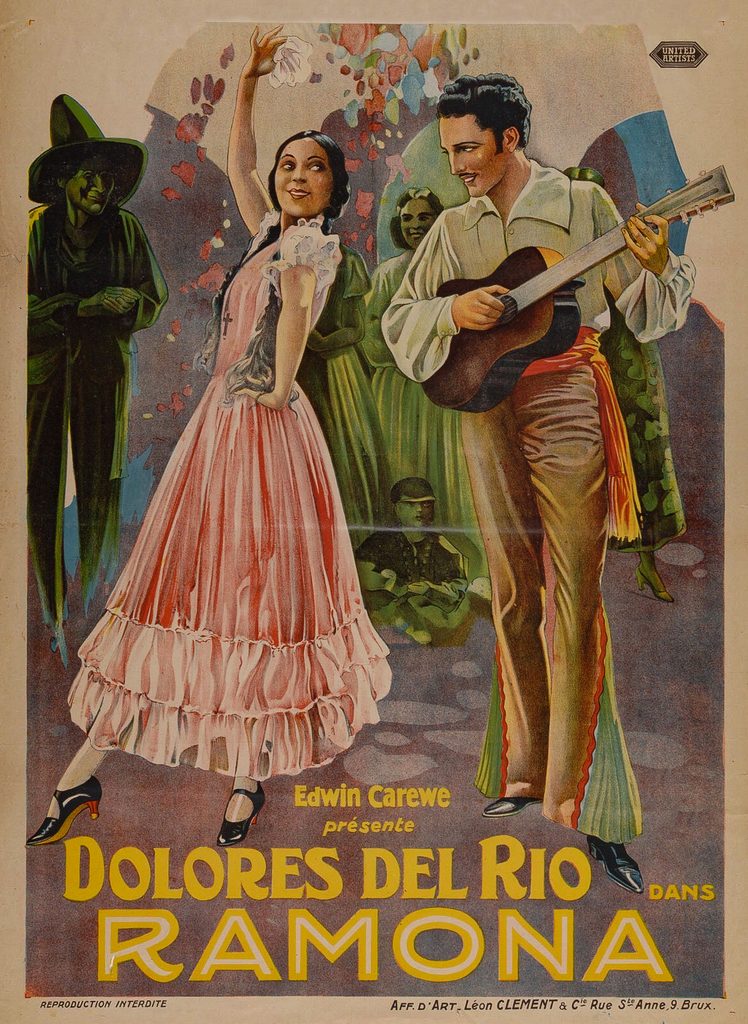
“Ramona”, a story based on the novel of author and activist Helen Hunt Jackson that controversial filmmaker D.W. Griffith (“Birth of a Nation”; “Intolerance”) tried to film as a short, tells the story of a half native Mexican woman who after refusing to marry her adopted brother flees to marry a Native man. I was fortunate to watch “Ramona” for the first time on the big screen of the Film Library of the University of Mexico in June, 2015, a year after Dolores del Rio´s biographer David Ramon noticed the United States claimed the Prague Film Library which kept a copy of the film as an “American Treasure” with a special screening of the film with pianist Jose María Serralde the way musicians supported silent films at the time playing live at the theatre.
For me, that discovery was a revelation, because after seeing Dolores in many of her box office hits from the 30s such as “Bird of Paradise” (King Vidor, 1932), the one that made Orson Welles fall in love with her “instantly”; “Flying Down to Rio” (Thornton Freeland, 1933), the one with the first pairing of the classic dancing couple of Fred Astaire and Ginger Rogers or “”Madame Dubary” (William Dieterle, 1934), or even most of her Golden Age of Mexican Cinema films from the 40s directed by either Emilio “Indio” Fernández or Roberto Gavaldón, projected Dolores´s histrionic potential to the fullest, a potential directors like John Ford noticed and used as well on his westerns “The Fugitive” (1947) and “Cheyenne Autumn” (1964).
After Dolores´ divorce from Jaime del Río in 1928, she got married again with renowned Art Director and production designer designer at MGM studios, Cedric Gibbons; divorced by Gibbons in 1941 after Dolores´steamy love affair with the aforementioned “boy wonder” Orson Welles during the production and premiere of his classic “Citizen Kane” (1941), the third and final marriage from the diva was with Lewis Riley, from 1959 until her death on April 11, 1983.
Although Dolores final Mexican box office hit was the Revolutionary epic “La cucaracha” (Ismael Rodríguez, 1959), starring alongside another icons from the Golden Age of mexican Cinema such as María Félix, Pedro Arméndariz and “El Indio” Fernández, from the 60s to the late 70s she aged gracefully portraying memorable mothers such as the beautiful Kiowa Indian wife of a white rancher and mother of Elvis Presley´s character in Don Siegel´s “Flaming Star” (1960) to the matriarch grandmother of “The Children of Sánchez” (Hal Bartlett, 1978), her final film starring with two time Academy Award Winning mexican actor Anthony Quinn.
Dolores del Río legacy has been honored in Hollywood with a star, a mural and a silver statue as part of “The Silver Four Ladies of Hollywood”, an art deco-style sculpture representing the diversity of women in Hollywood in the corner of Hollywood and La Brea depicting Dolores, Anna May Wong, Dorothy Dandrige and Mae West, but we look forward, at least once in a while on an occasion like the one of her recent birth anniversary, works like her powerful “Ramona” ate shown for the new generations of moviegoers, just like it’s going to happen again with a programmed screening at the Film Library of the University of Mexico on August 22 with pianist José María Serralde in person. Long live Dolores!