




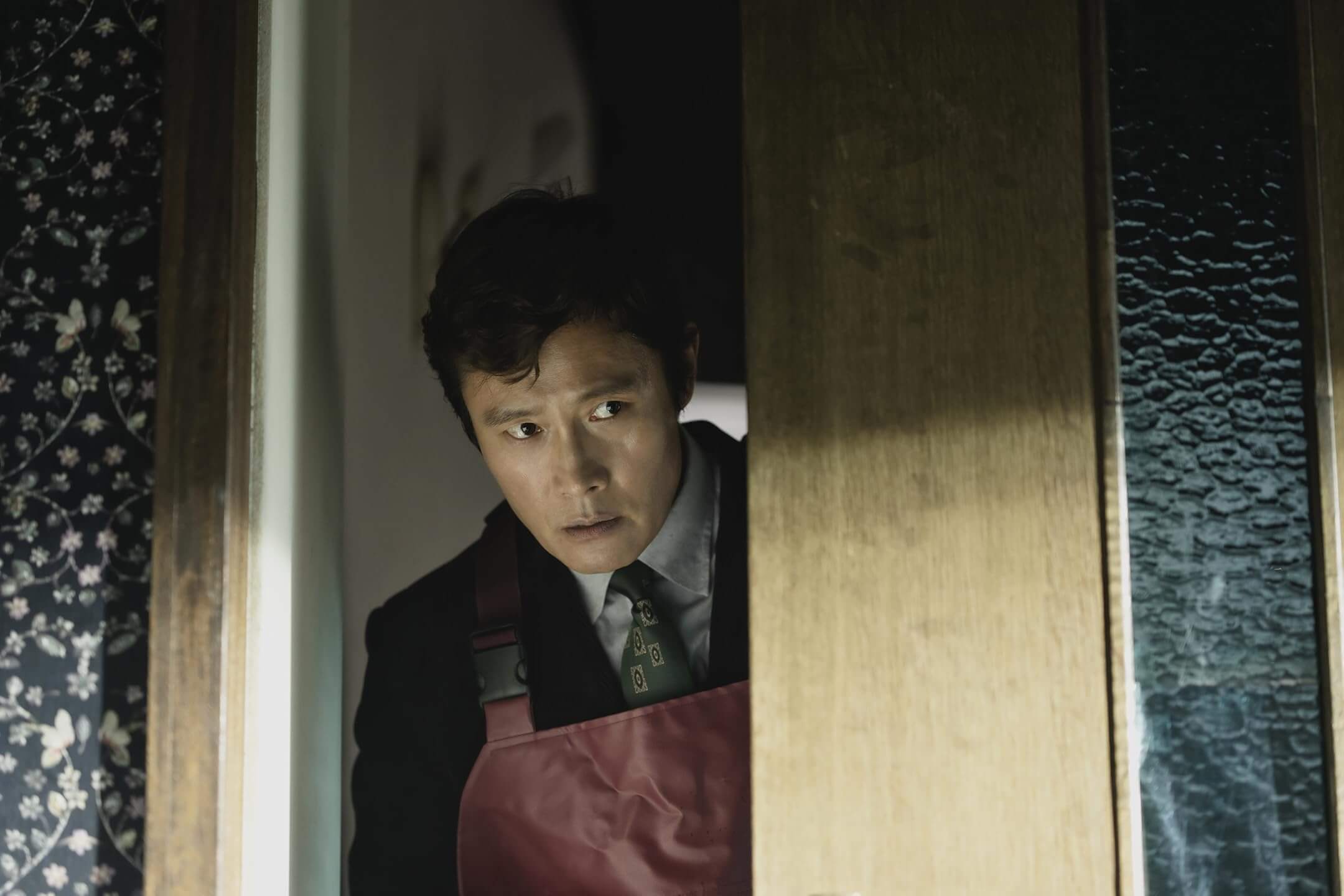
Directed by Park Chan-wook and based on Donald E. Westlake’s novel The Ax, No Other Choice is a darkly satirical psychological thriller that explores desperation, morality, and the crushing weight of societal expectation. Going into the film, I intentionally avoided most of the marketing and early reactions, aside from glancing at a few scores. With Park Chan-wook’s name attached, that alone was enough to spark my interest, and for the most part, the film delivers on what I was hoping for.
The story follows Man-su, an ordinary middle-aged man who abruptly loses his stable corporate job and begins to spiral under financial strain, social pressure, and an unforgiving job market. As rejection after rejection piles up, his desperation grows, pushing him toward increasingly disturbing decisions in a society that equates personal worth with productivity and success. What begins as quiet frustration gradually transforms into something much darker, as the film examines how far someone might go when they believe they truly have no other choice.
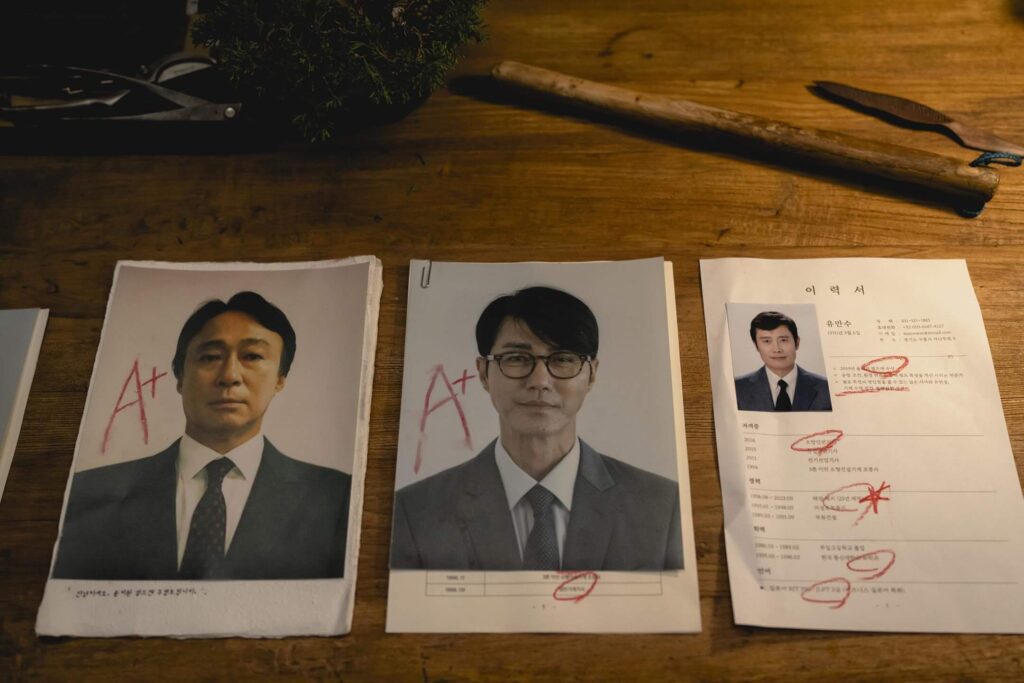
Overall, I really enjoyed No Other Choice. While I do have some issues with it, the film is a strong reminder of why Park Chan-wook remains such an acclaimed filmmaker. He has a remarkable ability to balance grounded drama with a sharp, strange sense of satire, while crafting morally gray characters who may make reprehensible decisions but remain psychologically understandable. Even when I did not agree with a character’s actions, I could usually understand the emotional road that led them there.
From a technical standpoint, the film is excellent. The cinematography is lush, with several striking compositions and creative transitions that blend shots together in visually interesting ways. The editing often enhances the unease of the story, while the sound design and restrained musical score subtly reinforce the film’s tone without overwhelming it. This is a movie that looks and sounds polished from start to finish.
The performances are another major strength. Lee Byung-hun is excellent in the lead role, especially as someone who had previously been more familiar to me through his work on Squid Game. Seeing him carry an entire film as a deeply flawed and unraveling protagonist was compelling. Son Ye-jin is equally strong as his wife, and together they form the emotional backbone of the film. Their performances do much of the heavy lifting, though the supporting cast is consistently solid, even in smaller roles.

Where the film becomes more divisive is in its handling of tone and pacing. Thematically, it has a lot to say about capitalism, dehumanization, and the psychological toll of financial instability. These ideas are mostly well-balanced, and the title itself extends beyond just Man-su’s journey. Other characters are shown making questionable decisions of their own, whether through crime, infidelity, or desperation, reinforcing the idea that many people feel trapped by circumstance.
However, the film’s dark satire will not work for everyone. While I appreciated the mix of drama and offbeat humor, there were moments where the satire felt a bit too goofy or leaned more into style than substance. These tonal shifts sometimes felt abrupt, particularly as the film moved deeper into darker territory.
Pacing is where the film struggles the most. With a runtime of just over two hours, there are stretches, particularly in the middle section, where the story feels like it stalls. Certain sequences, subplots, and characters feel unnecessary, and the film occasionally gives the impression that it is ending multiple times before finally concluding. I could not help but feel that a more streamlined version, closer to two hours or less, might have strengthened the narrative focus.
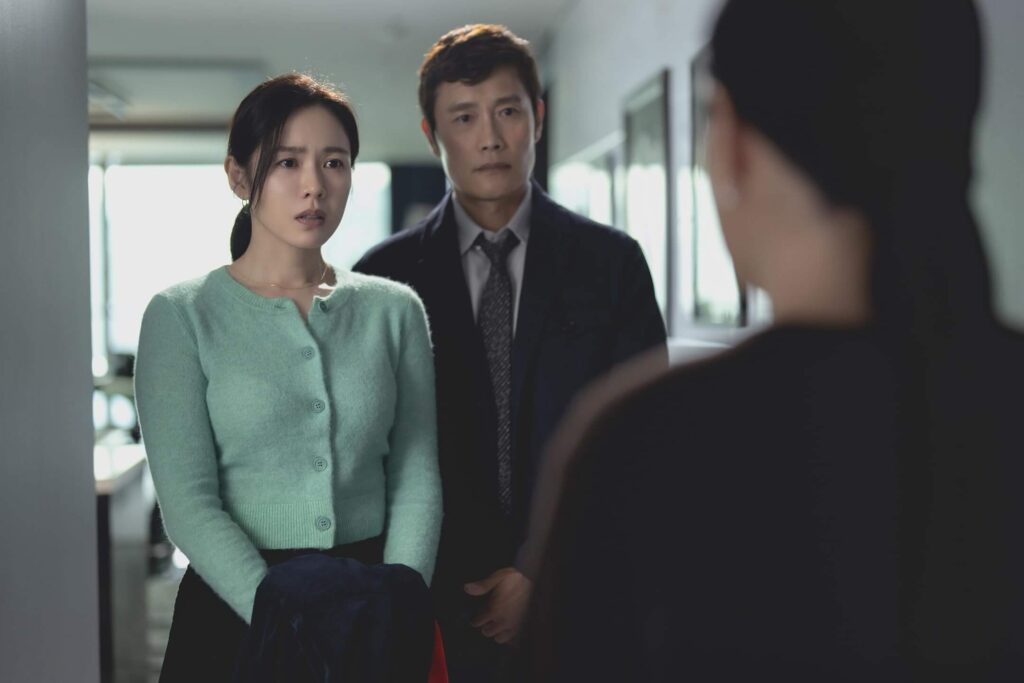
Despite these issues, I remained engaged throughout. The symbolism is effective, and the way the film expands its central idea across multiple characters adds depth. At its core, No Other Choice is a technically accomplished, well-acted film with meaningful commentary on societal pressure, financial stress, and moral compromise. There is also a compelling marriage story at its center, highlighting a ride-or-die partnership tested by extreme circumstances.
By the time the film ended, my takeaway was that this is a solid and engaging entry in Park Chan-wook’s filmography, even if it is not one of his strongest or most rewatchable works. I can understand why it has been met with largely positive reactions, especially from fans of his style. While it does not fully reach the heights of his best films, No Other Choice remains a thoughtful and unsettling character study that leaves plenty to reflect on long after the credits roll.
Rating: 7/10