




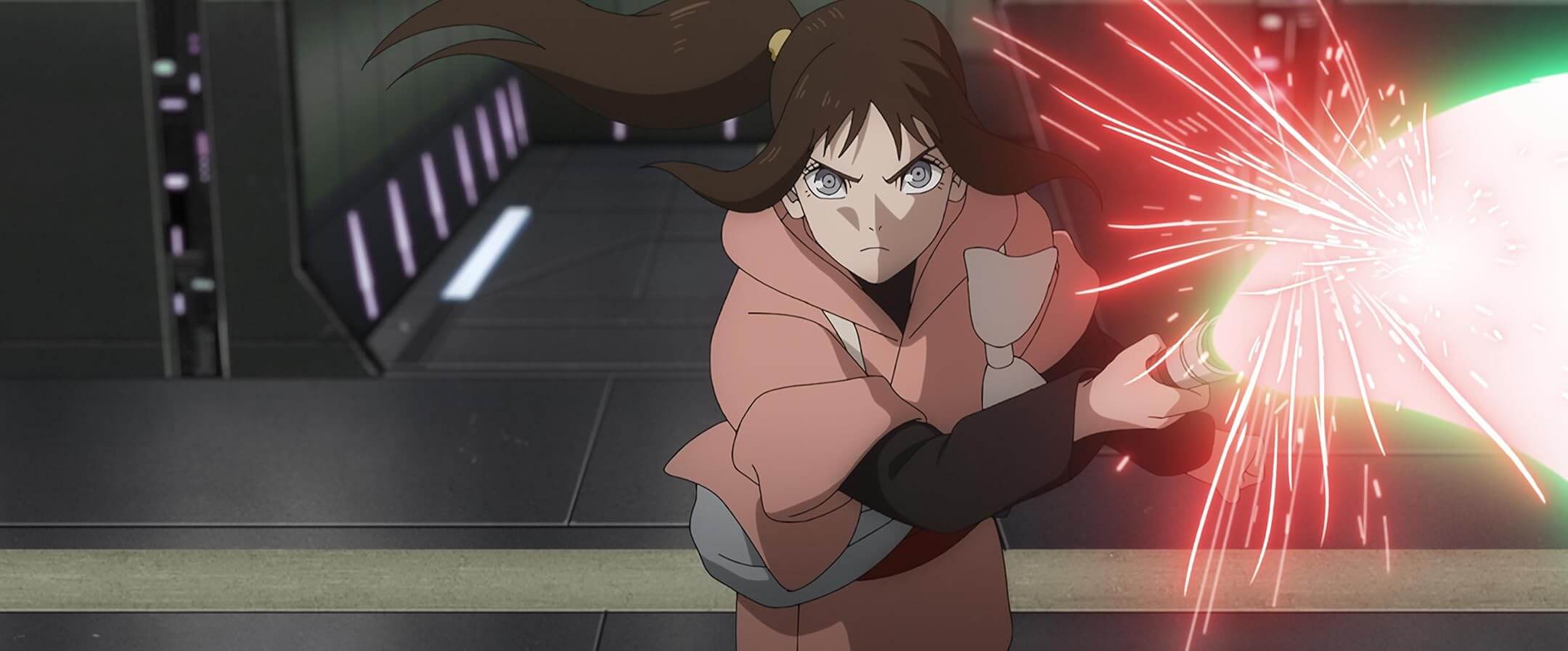
Firstly, a big thank you to Disney and Lucasfilm for providing me with early access to Star Wars: Visions Presents – The Ninth Jedi.
As someone who has loved Star Wars for as long as I can remember, this was one of my most anticipated projects of the year. Whether it’s the films, television series, novels, comics, or video games, this is a universe I have always been passionate about. I have also thoroughly enjoyed Star Wars: Visions since it first premiered. The anthology format has allowed animation studios to explore unique corners of the galaxy without being constrained by established canon, creating some of the most creative Star Wars stories we’ve seen in years.
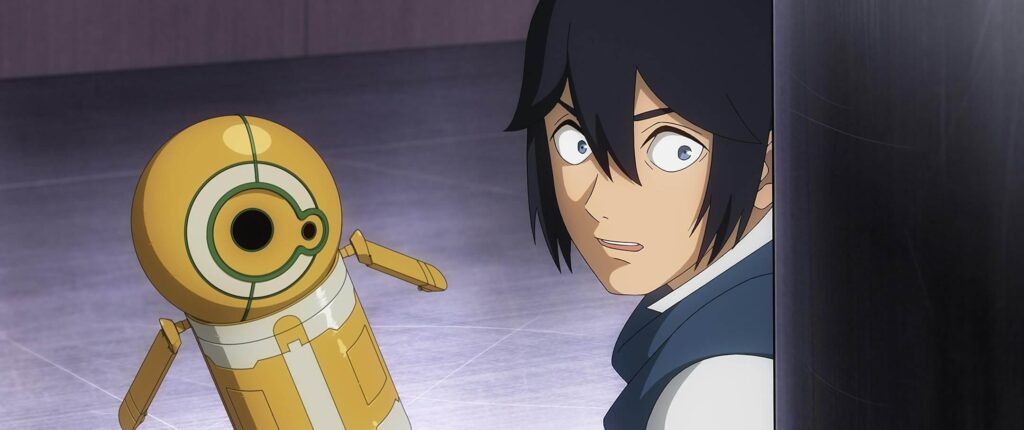
When the original The Ninth Jedi debuted during the first season of Star Wars: Visions, it immediately stood out as one of my favorite episodes. It was also one of the most beloved among fans. The follow-up short, The Ninth Jedi: Child of Hope, only strengthened my desire to see these characters continue their story. So hearing that Lucasfilm was expanding those episodes into a full anime series was incredibly exciting.
Before diving into this series, I highly recommend watching both previous The Ninth Jedi shorts from Star Wars: Visions. While this season opens with narration that catches new viewers up on the basics, those earlier episodes establish the characters, relationships, and emotional foundation that this series builds upon. They’re short, easy to watch, and absolutely worth your time.
Picking up after the events of The Ninth Jedi and The Ninth Jedi: Child of Hope, Kara continues her Jedi training under Margrave Juro while searching for her missing father, the legendary lightsaber smith Lah Zhima. As a powerful warlord rises and Jedi Hunters close in, Kara and her growing fellowship embark on a dangerous mission to recruit new Force-sensitive allies and restore hope to a galaxy where the Jedi have all but vanished.
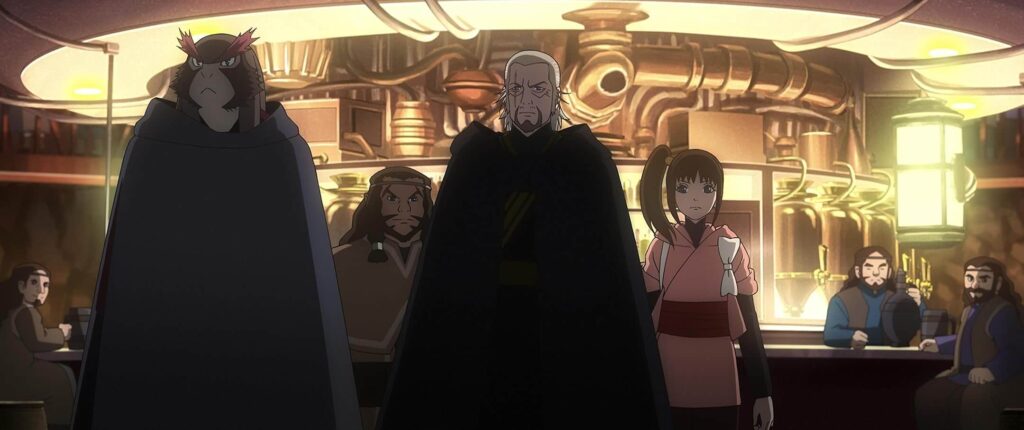
I had a really good time with The Ninth Jedi. As both an anime fan and a lifelong Star Wars fan, I kept finding myself smiling simply because I couldn’t believe this actually exists. We are finally getting a full Star Wars anime with one continuous narrative instead of standalone anthology episodes, and that alone is incredibly exciting.
One thing worth mentioning is that the series is available in both Japanese and English. I chose to watch it in Japanese because I personally think it fits the anime presentation a little better, but I also revisited several scenes in English afterward. Both casts do a great job, and I genuinely think viewers can enjoy the series either way depending on their preference.
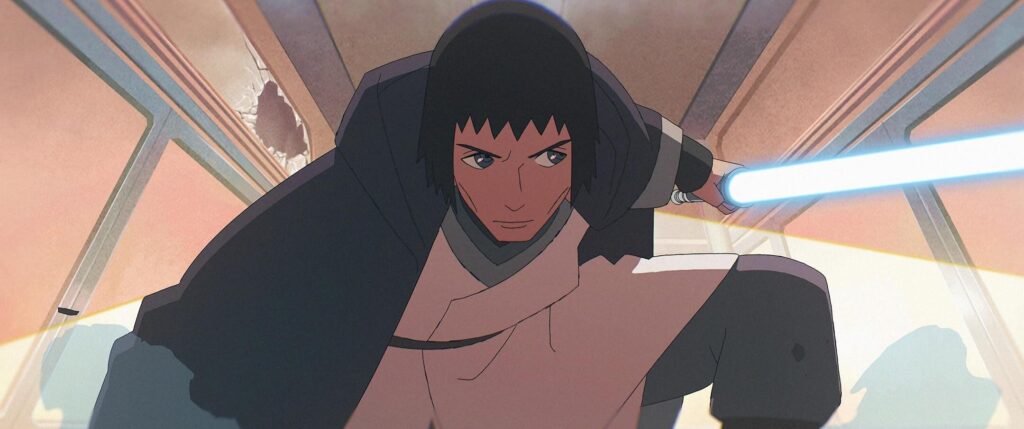
The cast is strong across the board, particularly the central trio of Kara, Margrave Juro, and Lah Zhima. Kara continues to be an engaging protagonist. While she occasionally falls into the familiar anime trope of learning new abilities very quickly, she’s still an easy character to root for throughout the season. Margrave Juro brings that classic Jedi Master and Padawan dynamic that immediately feels at home within Star Wars, while Lah Zhima remains one of the most fascinating characters thanks to both his role as a legendary lightsaber smith and the flashbacks that explore his own past and mentorship.
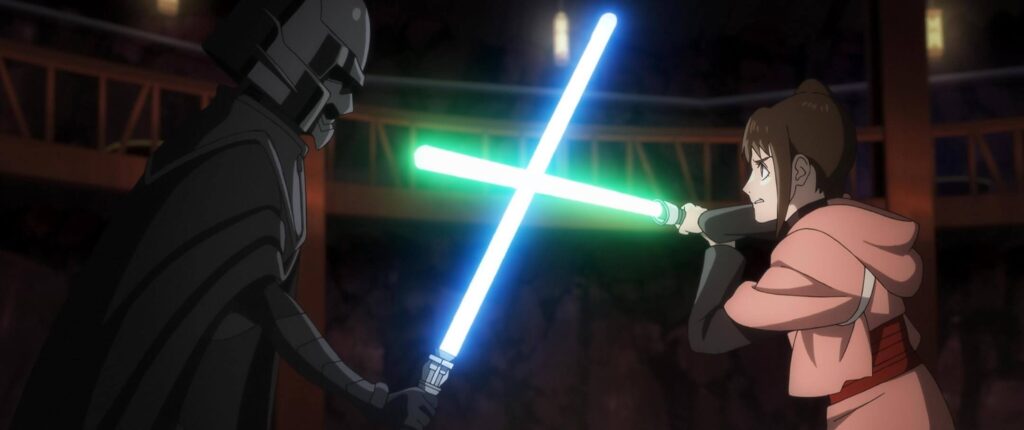
One of the most unique concepts carried over from the original short is Lah Zhima’s lightsabers, which change color depending on the heart of the wielder. It’s a brilliant spin on existing Star Wars mythology. Rather than simply relying on traditional kyber crystal lore, the blades visually reflect a character’s moral state. This leads to several satisfying reveals throughout the season and even introduces another color representing a balanced emotional state. It’s a clever addition that feels fresh while still respecting the themes of Star Wars.
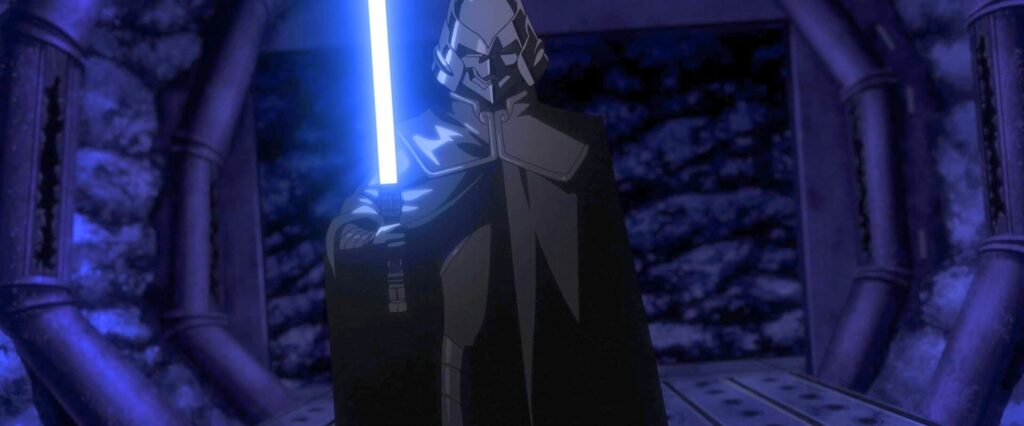
The villains are another highlight, especially Nawaam. Beyond simply looking intimidating with his striking armor and helmet, he’s given understandable motivations that make him more compelling than a standard evil antagonist. Much like Kara, his worldview has been shaped by mentorship, and the series spends a surprising amount of time exploring how both positive and negative influences shape who people become. That emphasis on mentorship becomes one of the strongest thematic elements throughout the season, alongside family, fellowship, teamwork, and hope.
Production I.G. absolutely delivers when it comes to the animation. The visuals are stunning, blending iconic Star Wars imagery with dynamic anime action. The lightsaber battles are especially impressive, bringing an energy and fluidity that feels uniquely suited to animation. The ship designs, environments, and colorful fantasy-inspired visuals create a world that feels distinctly Star Wars while still embracing its own identity.
Another major standout is the musical score by Nobuko Toda. Her work captures the spirit of John Williams without ever simply copying his music. Several moments sound as though they’re building toward familiar Star Wars motifs before shifting into entirely original compositions that still feel perfectly at home within the franchise. It’s one of the biggest reasons the series maintains such an authentic Star Wars atmosphere despite existing outside of the main canon.
My biggest criticism ultimately comes down to the show’s length. While eight episodes make for an easy binge, the episodes themselves range from roughly 20 to 30 minutes, and I couldn’t help wishing there was simply more of it. Several emotional moments and character arcs feel rushed because the series doesn’t always allow important story beats enough room to breathe. Some supporting characters become proficient with lightsabers remarkably quickly, while Kara herself occasionally progresses so rapidly that she borders on feeling overpowered.
None of these issues ruin the experience, but they do keep the series from reaching its full emotional potential. I found myself invested in the characters and their journey, but I wasn’t nearly as emotionally attached to them as I wanted to be by the finale. It feels like the foundation for something truly great rather than the complete realization of its potential.
Even with those shortcomings, I thoroughly enjoyed The Ninth Jedi. It’s visually gorgeous, filled with exciting action, features memorable characters, expands Star Wars mythology in creative ways, and fully embraces its anime identity. More than anything, it left me wanting another season, which is probably one of the best compliments I can give it. If Lucasfilm continues building on this story, I genuinely think it has the potential to become one of the strongest animated corners of the Star Wars universe.
Rating: 8/10