



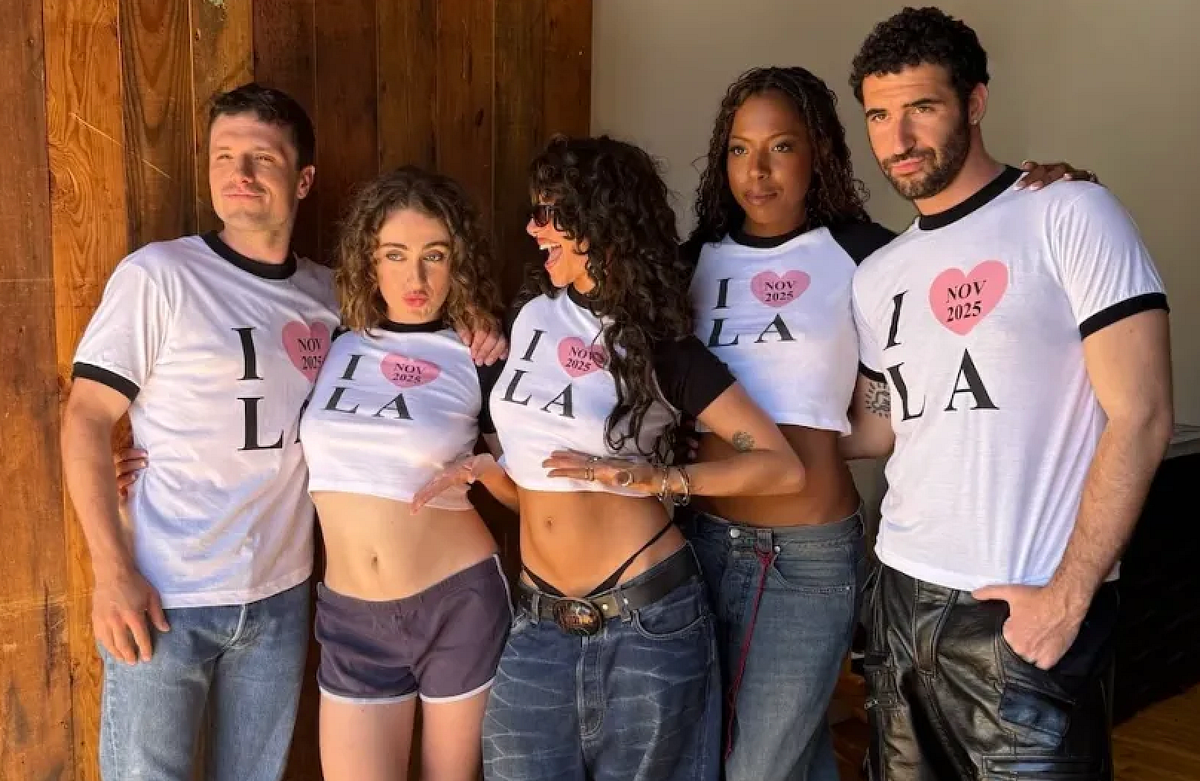
When Rachel Sennott’s comedy I Love LA debuted on HBO, it was marketed as a sharp, modern look at the absurdity of influencer culture and the creative class. But for anyone who actually lives in Los Angeles—particularly on the city’s vibrant *Eastside districts—the show presents a jarring, alternate reality. It is a reality where the neighborhoods are beautifully aestheticized, the artisanal coffee shops are perfectly framed, and the brown faces that actually built those communities are almost entirely invisible.
The disconnect is not just an artistic choice; it is a mathematical failure of representation.
The Demographics vs. The Screen
I Love LA anchors its characters in the trendy enclaves of Silver Lake, Echo Park, Eagle Rock, and Highland Park. The show utilizes real-life local landmarks like the Silver Lake Reservoir and the Capri Club to ground its narrative in “authentic” LA. Yet, the demographic reality of these districts paints a completely different picture than the overwhelmingly white and non-Latino friend group on screen:
Highland Park: The show frequently uses its artsy, gentrified backdrop. In reality, Highland Park is 59% Latino, deeply rooted in Mexican and Salvadoran culture.
Echo Park: A central hub for the show’s characters. It maintains a 46% Latino plurality.
Eagle Rock: The neighborhood is a highly diverse melting pot with a 35% Latino and 23% Asian American population.
Silver Lake: Even as the most heavily gentrified district in the lineup, it still boasts a 23% Latino population.
By treating these neighborhoods as mere playgrounds for wealthy, non-Latino creatives, the showrunners actively participate in a form of cultural erasure. They harvest the “cool” factor of the Los Angeles while editing out the actual population that gives it its soul, thus going from “Cool,” to “Culero.”
The Tokenization of the “Eastside.”
Defenders of the show will point to Augusto Aguilera’s recurring role as Andrew—a gay Latino character—as a shield against criticisms of whitewashing. But a deeper look reveals this for what it is: tokenism.
Andrew appears in a mere three out of eight episodes in the first season. His character exists primarily as a romantic plot device to facilitate the emotional growth of Charlie Cohen (Jordan Firstman). When the only prominent Latino representation in a show filmed in a 60% Latino neighborhood is relegated to a minor, recurring romantic foil, it is a hollow, piñata gesture.

Doubling Down on Whitewashing in Season 2
If the first season’s demographic erasure was a systemic oversight, the newly announced casting decisions for the upcoming second season prove that it is a deliberate creative choice.
HBO recently announced that major stars like Taron Egerton and Jamie Chung are joining the cast for Season 2. While these are high-profile additions, the press release reveals a glaring omission: not a single new Latino actor or Latino-specific character was announced.
Instead of taking the constructive criticism of Season 1 to heart and reflecting the actual community they use as a backdrop, the creators have doubled down. They are loading the call sheet with even more non-Latino stars to populate their highly curated, gentrified bubble. By expanding the cast without addressing the demographic void at the center of the show, the creators are sending a clear message: the Latino population of LA is welcome to serve the coffee and rent out the apartments, but they are not welcome in front of the camera.
The Contrast: Doing LA Right
The creative failure of I Love LA is made even more glaring when contrasted with other recent television series that managed to capture the real fabric of Los Angeles without erasing its majority population. Shows across various networks and genres have proven that integrating authentic Latino identity into the core of a story is not difficult—it simply requires intentionality:
The Bear (FX/Hulu): While set in Chicago rather than LA, the series provides a masterclass in organic representation through characters like Tina Marrero (played by Liza Colón-Zayas). Tina’s identity is deeply explored, multi-dimensional, and central to the kitchen’s ecosystem, contrasting sharply with the tokenized, peripheral treatment of Latino characters in I Love LA.

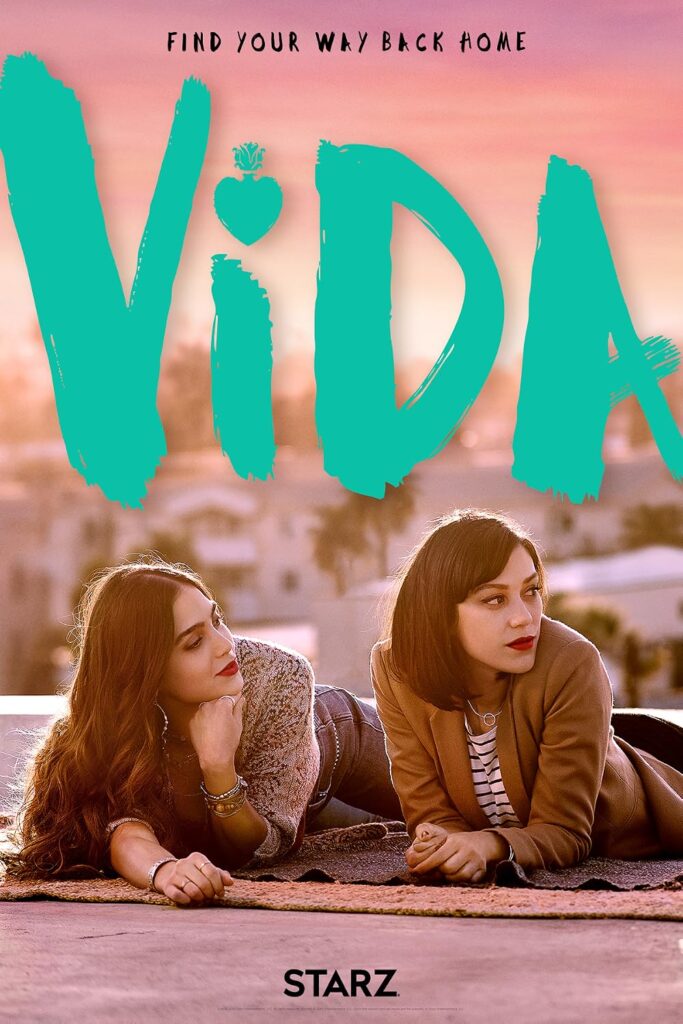
Vida (Starz): Perhaps the most direct ideological opposite to I Love LA, Vida was set in the exact same geographic region of the Eastside (specifically Boyle Heights). However, it chose to focus explicitly on two Mexican-American sisters dealing with grief, gentrification, and queer identity. It proved that the Eastside’s cultural landscape is wealthy enough to carry an entire series, rather than just serving as wallpaper for non-Latino protagonists.
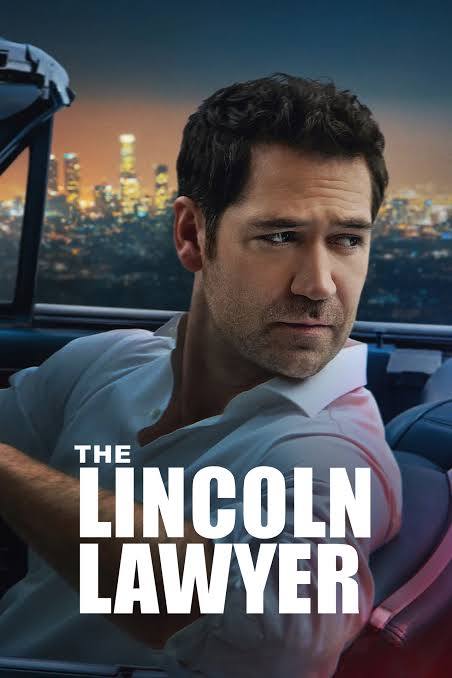
The Lincoln Lawyer (Netflix): This massive hit captures a broad, realistic portrait of modern Los Angeles by centering Mickey Haller, a Mexican-American defense attorney navigating the city’s legal system. The show naturally integrates Latino cultural roots and family dynamics into a premium mainstream drama without reducing the identity to a single-episode checkbox.
A Failure of Creative Responsibility
The creative team behind I Love LA has fallen into a lazy, familiar Hollywood trap. They have moved into historically working-class, immigrant neighborhoods, set up their cameras, and filmed a story about themselves, oblivious and uncaring to the city that made them. In doing so, they reduce a rich, complex cultural landscape into a series of highly curated backdrops for Gen-Z Gringo, existential dread.
If you are going to title your show “I Love LA, ” you need to love the real LA—not just the parts that fit into a gentrified aesthetic. Until the creators look past their own reflection in the mirror, the series will remain a glaring example of tone-deaf Hollywood insularity.
* The real eastside of Los Angeles is beyond east of the Los Angeles River, gracias.