



In the early 60s, Rita Moreno made history when she became the first Latina to win an Academy Award for Best Supporting Actress of 1961 for her work in the classic musical West Side Story.
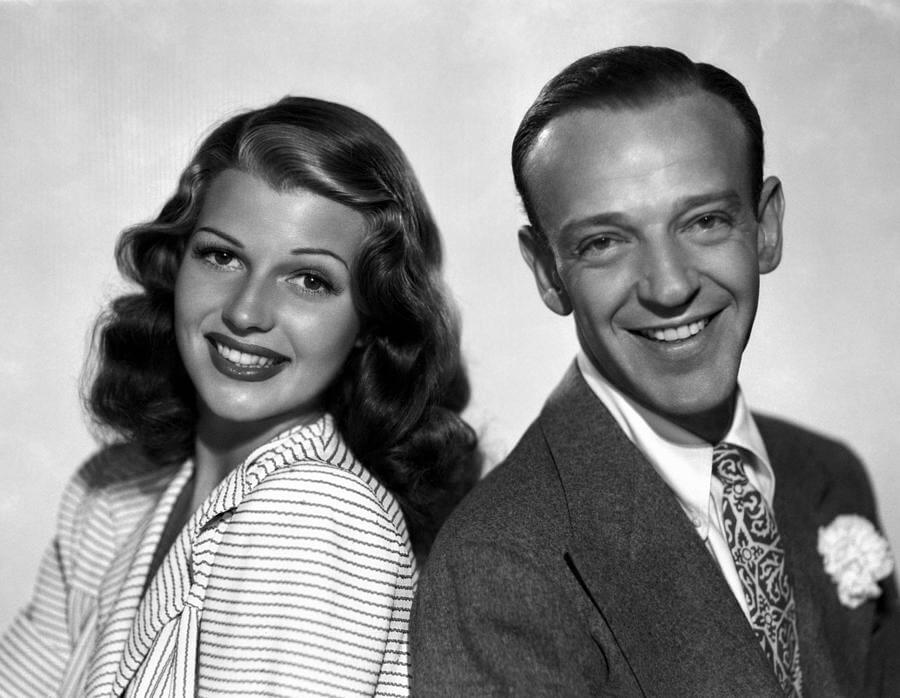
Sadly, another Rita before her, Rita Hayworth, was already fading at a very early age, even by Hollywood standards, being only 43 in 1961. (This wasn’t unique to her – Bette Davis’ and Gloria Swanson’s characters in the early 50s classics All About Eve and Sunset Boulevard suffer for the same reason, as newcomers take the spotlight and the best roles from middle-aged women in theater and film.) Pal Joey (George Sidney, 1957), where she was one of the main stars, marked her goodbye to musicals. Her next project, the Academy Award-winning Separate Tables (Delbert Mann, 1958), still in black and white, showed a first-rate actress, but not a sexy one.
Rita Hayworth, just like Rita Moreno, started her career in entertainment in New York City. Just like the Academy Award winner, she had to change her real name from Margarita Carmen Cansino (her father, Eduardo Cansino, was a Spanish dancer and vaudeville actor). She grew up combining her dancing and acting skills, making her film debut in 1926 in the short film La Fiesta for Warner Bros. as part of “The Dancing Cansinos,” a four-member acting family ensemble alongside her father Eduardo, her mother Volga Hayworth, and her younger brother Eduardo Jr. That experience brought them to Hollywood in 1927.
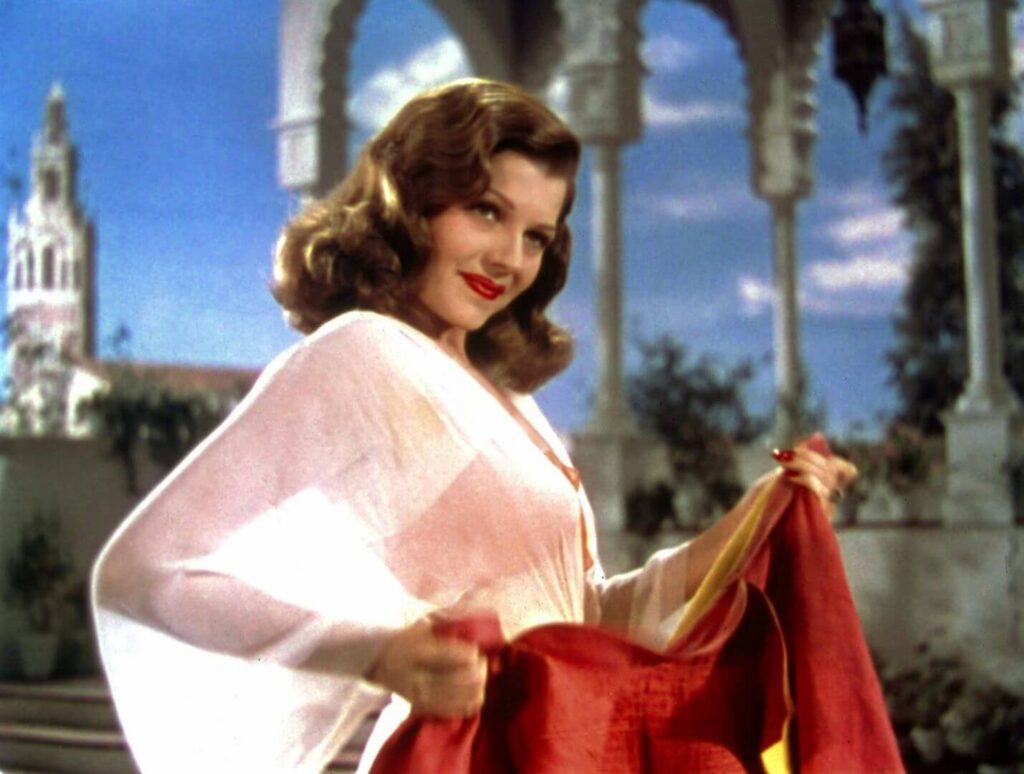
Eduardo Cansino believed his choreographies could bring them to the big screen, so he established a dancing studio on Sunset Boulevard attended by stars such as James Cagney and Jean Harlow. Then the early 30s and the Great Depression forced Rita to quit school and work in casinos on the Mexican border, now as a duo with her father called “Dancing Cansinos.” She made her Hollywood debut in a Spanish-speaking film made by Mexican filmmaker Fernando de Fuentes titled Cruz Diablo at 16, a role which brought her to the Dolores del Rio starrer In Caliente (Lloyd Bacon, 1935) – and it was this film that brought the dancing Rita to Hollywood.
In the same year, 1935, and more precisely after a dance sequence with erotic moves alongside Gary Leon in the Spencer Tracy film Dante’s Inferno, directed by Harry Lachman, the name Rita Cansino became known after signing a contract with Fox Studios. It wasn’t until the end of the decade, after taking her mother’s last name, that she became a Columbia Pictures contract star, starring in the classic Only Angels Have Wings (Howard Hawks, 1939) alongside Cary Grant and Jean Arthur. Her career continued into the early 40s with another classic, Blood and Sand (Rouben Mamoulian, 1941), and by the mid-40s she had become Columbia’s biggest star.
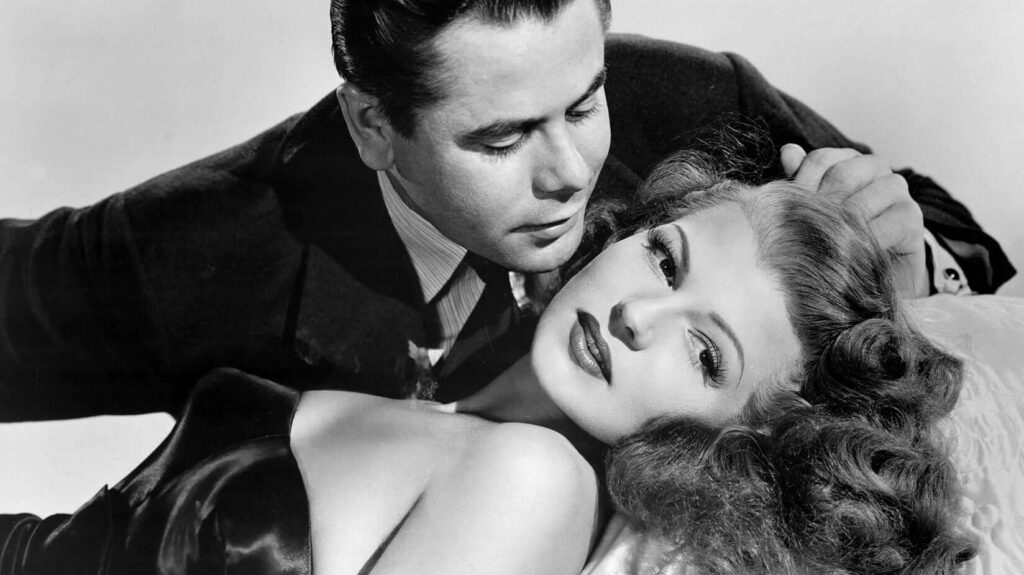
Gilda was a film noir directed by Charles Vidor where Rita made sparks fly with Canadian actor Glenn Ford as her love interest. It marked the start of her golden decade on film, which included other film noir classics in black and white such as The Lady from Shanghai (1947, starring and directed by her then-husband Orson Welles) and the aforementioned Pal Joey (1957); Technicolor classics such as The Loves of Carmen (Charles Vidor, 1948); another film noir alongside Glenn Ford, Affair in Trinidad (Vincent Sherman, 1952); and the historic drama Salome (William Dieterle, 1953), among others.
After starring in George Marshall’s comedy The Happy Thieves (1961), also starring Academy Award winner Rex Harrison, Rita kept working in Hollywood, saying farewell to film in the political drama The Wrath of God (Ralph Nelson, 1972). She was billed after Robert Mitchum and Frank Langella, portraying a character called “Señora de la Plata,” the wife of Langella’s character, Thomas de la Plata. But one thing we’re sure of: Rita left a big mark on the silver screen. Not only her presence, but also her name, became the basis of one of the most acclaimed films of the late 20th century, The Shawshank Redemption (Frank Darabont, 1994).
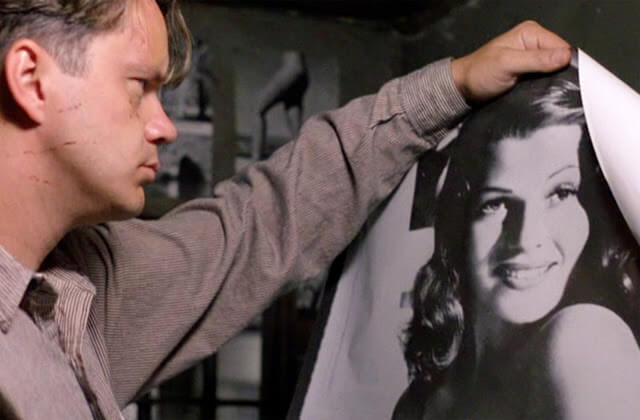
Based on the novella Rita Hayworth and the Shawshank Redemption, written by horror icon Stephen King, Rita is the object of affection of its leading character, inmate Ellis Boyd “Red” Redding. Just as her image on a poster is the gate to freedom for Red, cinema was the gate to freedom for Margarita Cansino herself. She sadly passed away on May 14, 1987, at age 68, suffering from Alzheimer’s – a disease that erased her memory, including a life of abuse starting with her father at an early age, which we’d rather leave aside here. But her work on film will transcend history: 100 years after her first appearance, her legacy as one of Hollywood’s great Hispanic stars will prevail.