



By D. Movieman
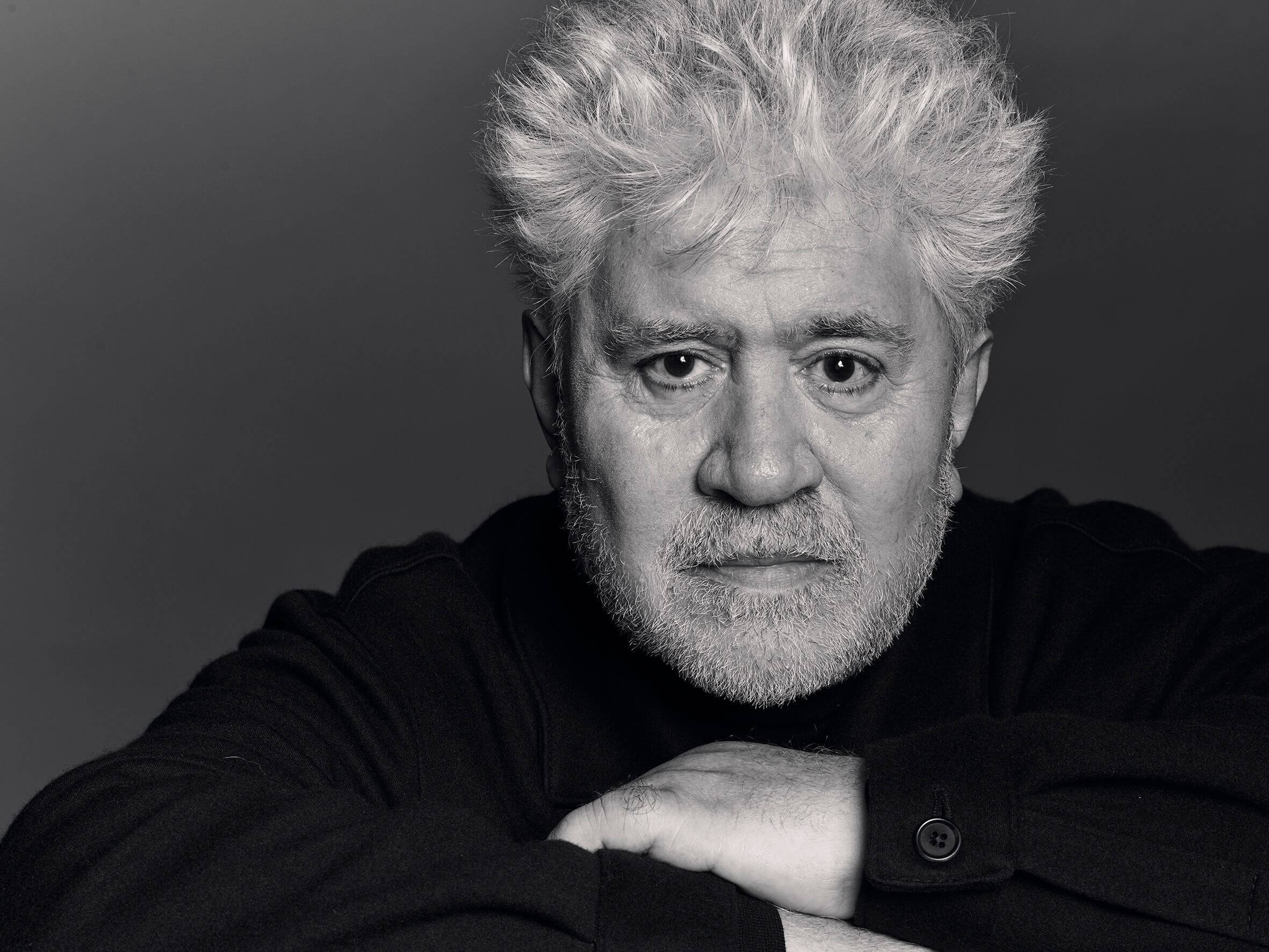
As I reflect on The Latino Slant’s celebration of Hispanic Heritage Month, it naturally leads me to consider my impactful experiences watching Hispanic films. Despite my deep love and appreciation for foreign cinema, it’s almost unbelievable to think that my awareness of Spanish-language films only began with Guillermo Del Toro’s universally acclaimed Pan’s Labyrinth in 2006. Released during my high school years, this stunning film eventually laid the groundwork for my first viewing of Pedro Almodóvar’s Volver. While I continued to keep the ball rolling with a variety of Spanish-language films, I occasionally found myself gravitating towards Almodóvar’s films. As I’ve gradually familiarized myself with his work over the years, I figured it would only be fitting to list 5 standouts from his extensive filmography here.
5. Matador
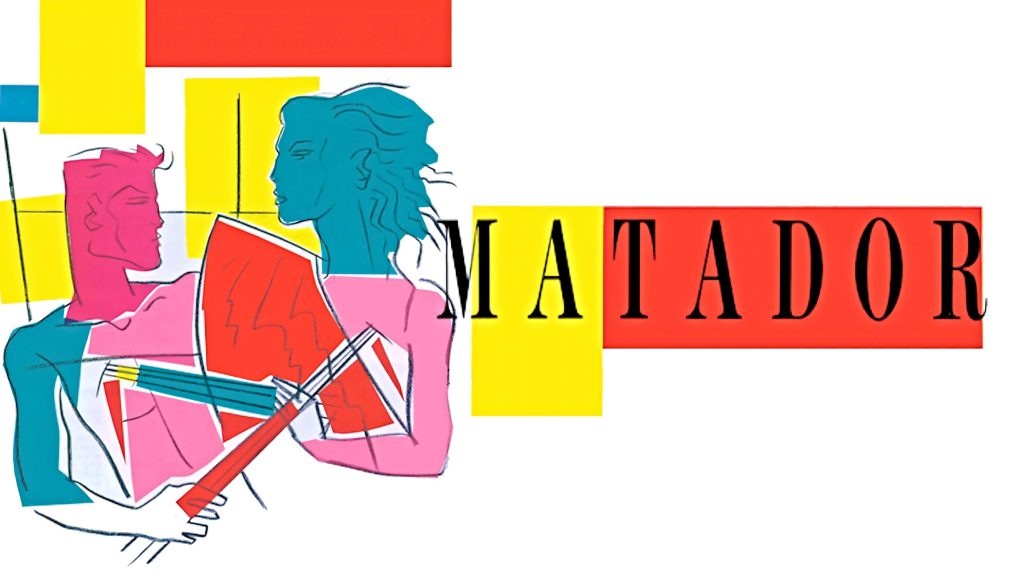
Ironically, my fifth entry also happens to be Almodóvar’s fifth film. Centered around the world of bullfighting, the eponymously titled Matador follows Diego Montes, a retired bullfighter and Ángel, one of his students. When Ángel is unexpectedly drawn into a murder conspiracy, he begins to suspect a greater conspiracy connected to strange visions of a seductive serial killer. Like many of Almodóvar’s films, Matador is marked by bold, vivid colors and flagrant displays of sexuality. It’s a film that, while centered around murder and criminal conspiracy, also makes use of supernatural and psychological themes. Despite featuring a breakout role from a young Antonio Banderas, Matador’s most memorable turn comes from Assumpta Serna. As Maria, Ángel’s mysterious lawyer, Serna portrays a woman whose true nature gradually reveals itself – in rather troubling ways. While Almodóvar considers Matador one of his weakest films, I find it captivating, memorable, and more than worthy of a spot on this list.
4. Broken Embraces (Los Abrazos Rotos)

Similar to another film on this list, my next entry centers itself around the internal trials of a filmmaker. However, Broken Embraces also takes a step further, weaving together desire, memory, and the cinematic world. Alternating between the 1990s and the year 2008, the film follows “Harry Caine,” a blind screenwriter haunted by the tragedy surrounding his long-lost love. Here, Almodóvar forgoes some of his daring storytelling devices for something more straightforward. Still, the glorious cinematography and Hitchcock-inspired direction cannot be denied. While an abundance of her screentime is shared alongside Lluís Homar and José Luis Gómez, Penélope Cruz emerges as the film’s ultimate standout. While her dialogue is delivered with conviction, it’s her on-screen radiance and magnetism that illuminates the film. It may not pack the same emotional punch or feature the visual intensity of previous films, but Broken Embraces still leaves a noteworthy impression.
3. Pain and Glory (Dolor y Gloria)
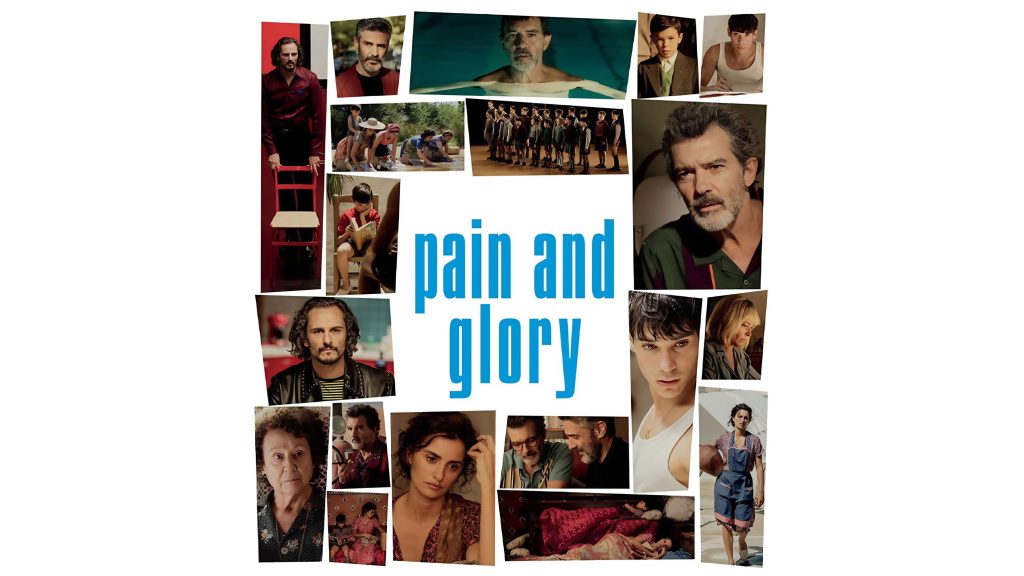
As previously mentioned, Broken Embraces is not Almodóvar’s only exploration of the complexities of filmmaking. Moreover, my third entry marked a significant change of pace for the director in several ways. In a departure from his distinctive style, Pain and Glory recounts the bittersweet story of an aging filmmaker named Salvador Mallo. As his health begins to decline, he finds himself reflecting over the lasting memories of his life. If it weren’t already apparent, Pain and Glory is a semi-autobiographical work inspired by Almodóvar’s own career and experiences. As such, gone are the boldly flamboyant colors and rampant melodrama featured throughout his filmography. Instead, the film maintains a quietly reflective mood and restrained aesthetics. This is buoyed by a masterful performance by Antonio Banderas who, in his eighth collaboration with Almodóvar, imbues Mallo with quiet introspection. Pain and Glory is a film that not only showcases Almodóvar’s artistry as a director, but more importantly, reveals his emotional depths as a human being.
2. The Skin I Live In (La Piel Que Habito)
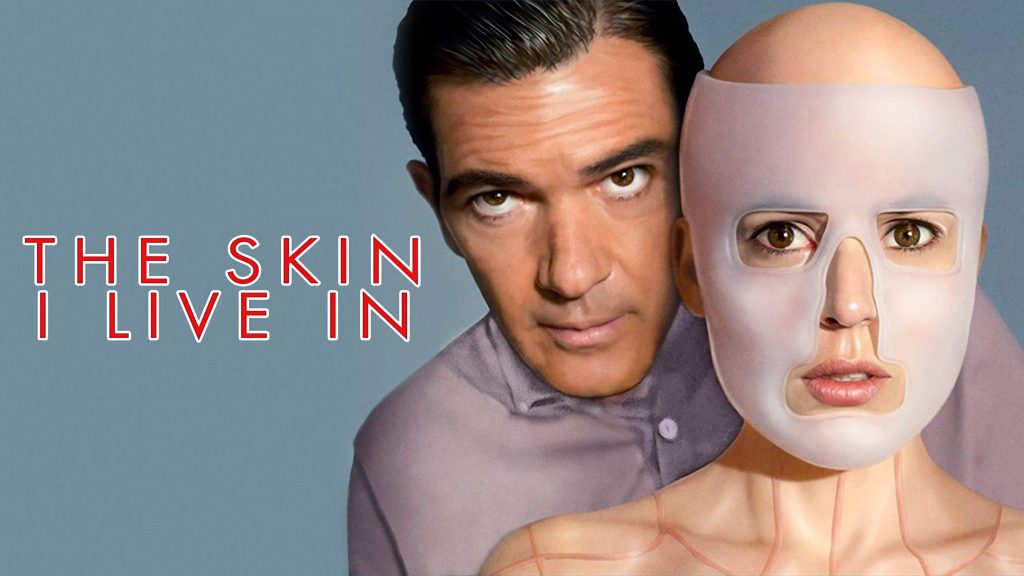
If the previous entry indicated Almodóvar’s penchant for reinvention, then The Skin I Live In marks a massive genre shift into psychological horror. Based on Thierry Jonquet’s 1984 novel Tarantula, the film follows Dr. Robert Ledgard, a plastic surgeon experimenting with synthetic skin. Yet his steely resolve belies a darker truth: His experiments are directly connected to a woman named Vera, who is a prisoner in his home. Naturally, I was first introduced to Antonio Banderas in 1998’s The Mask of Zorro as the heroic titular character. It’s particularly unsettling, then, to see him disappear into a role so fundamentally opposed to that persona. Evoking Victor Frankenstein or Dr. Génessier from Eyes Without a Face, Dr. Ledgard embodies the chilling cost of unchecked scientific ambition, vengeance, and the moral degradation that accompanies it. Elena Anaya is also a revelation as Vera, whose volatile outbursts and simmering resentment hint at a frightening secret. Beyond its shocking twists and turns, The Skin I Live In is a thrilling showcase of Almodóvar’s ability to balance visual beauty with unspeakable horror.
1. Volver

It might be easy to assume that Volver would top this list simply because it introduced me to Pedro Almodóvar’s work in the first place. However, you would be wrong. While I retain fond memories of my first watch as a teenager, Volver carries a far greater emotional weight for me as an adult. The film follows the lives of three women: Raimunda, her sister Sole, and Raimunda’s daughter Paula. When a shocking family tragedy occurs, Raimunda is forced to undergo extraordinary lengths to protect her family – even as rumors of ghosts returning from the dead begin to abound. Like Antonio Banderas, Penélope Cruz has collaborated with Almodóvar in multiple films throughout their careers. However, there’s something particularly electrifying about her performance as Raimunda. Embodying fierce maternal instinct, desperation, and bitterness, Cruz is truly at a career best here. Additionally, she is fortified by an array of impactful supporting female performances from Carmen Maura, Yohana Cobo, Blanca Portillo, and Lola Dueñas. What affects me so deeply in Volver is how – similar to Toni Morrison’s Beloved – it speaks to being haunted, literally and figuratively, by the sins of the past. As such, it also utilizes the perspective of the supernatural in understanding how to overcome them. It’s a hilarious, stunning, emotional, and memorable film in a variety of ways. So, it’s only fitting that a piece about Pedro Almodóvar’s filmography features what I consider to be one of his best works.
Editor’s Note: Pedro Almodóvar’s newest film, Bitter Christmas (Amarga Navidad), opened in New York and Los Angeles on November 13 and expands nationwide on November 25 through Sony Pictures Classics. It premiered in competition at the 2026 Cannes Film Festival and stars Bárbara Lennie, Leonardo Sbaraglia, and Aitana Sánchez-Gijón. The film follows two parallel stories: Elsa, a filmmaker grieving her mother, and Raúl, a director in a creative slump who turns the life of his longtime collaborator Mónica into a screenplay. Fans of Pain and Glory will notice a lot in common, since this is another semi-autobiographical look at a filmmaker examining his own life and work.