



by D. Movieman
“No matter how your heart is grieving, if you keep on believing, the dream that you wish
will come true.”
— Cinderella (1950)
Though popularized by Charles Perrault’s Cendrillon (1697) and the Brothers Grimm’s
Aschenputtel (1812), the story of The Little Cinder Girl appears in thousands of
variations across cultures, with roots as far back as ancient Greece.
Whimsical fairy godmothers, dazzling enchantments, and shimmering glass slippers
aside, Cinderella’s lasting power lies in its themes of hope, self-discovery, and the
triumph of good over adversity. For me, it was an early reminder that true magic resides
in character, intention, and action. As such, The Dreamer Cinderella attempts to home
in on this tried-and-true narrative, with a very timely immigration arc as its backdrop. In
this tale, the story centers around Xochitl/Sochi (Anakaren Chablé), a Mexican
American street fruit vendor with a heart of gold. Faced with mounting debts and an
uncertain future, her life takes an unexpected turn when a powerful film director makes
her the subject of a daring bet with his career rival. However, her status as an
undocumented immigrant soon threatens to derail her dreams of stardom and success.
What stands out most for me about The Dreamer Cinderella is the intention behind its
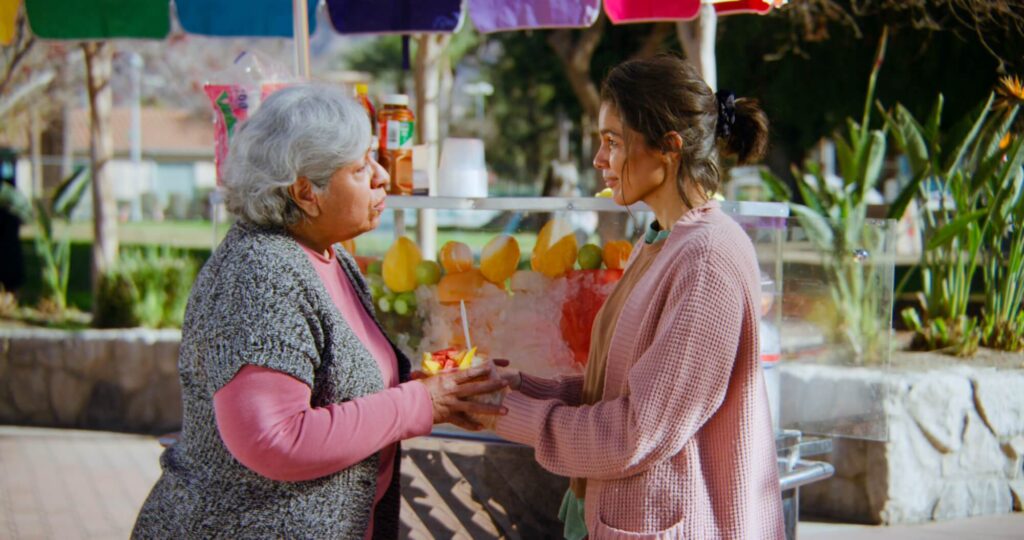
story. Considering that the romance/romantic comedy genre provides very little in terms of continuous Latino/Latina representation, it’s refreshing to see a film that firmly centers itself around a Mexican American lead. Moreover, it’s willing to delve into the challenges behind the undocumented experience. We see how this experience permanently alters Xochitl’s family in earlier years, leaving her and her documented sister Paloma struggling for survival. Yet, the threat of deportation remains, even as an unexpected opportunity is set in motion by film director Jonathan’s accepted bet. As someone who appreciates foreign languages and foreign films alike, I found it refreshing seeing the film’s willingness to incorporate bilingual interactions into the script. For example, there’s a fair amount of charm and quirkiness to be found in the interactions between Xochitl, Paloma, and the landlord couple of Doña Flaca and Savino. Lastly, I appreciated the surprising number of familiar faces found here, including LisaRaye McCoy, Paul Rodriguez, and Tara Reid.
One of the biggest disconnects I found with The Dreamer Cinderella lies in its overall
execution of the story. This has nothing to do with budgetary constraints, considering
that this is an independent effort—something I have and will continue to champion. That
being said, there are many elements related to the direction and filmmaking here that
feel oddly rough-hewn. For instance, many of the acting performances feel strangely
artificial, making the characters feel more like stand-in performers than actual people.
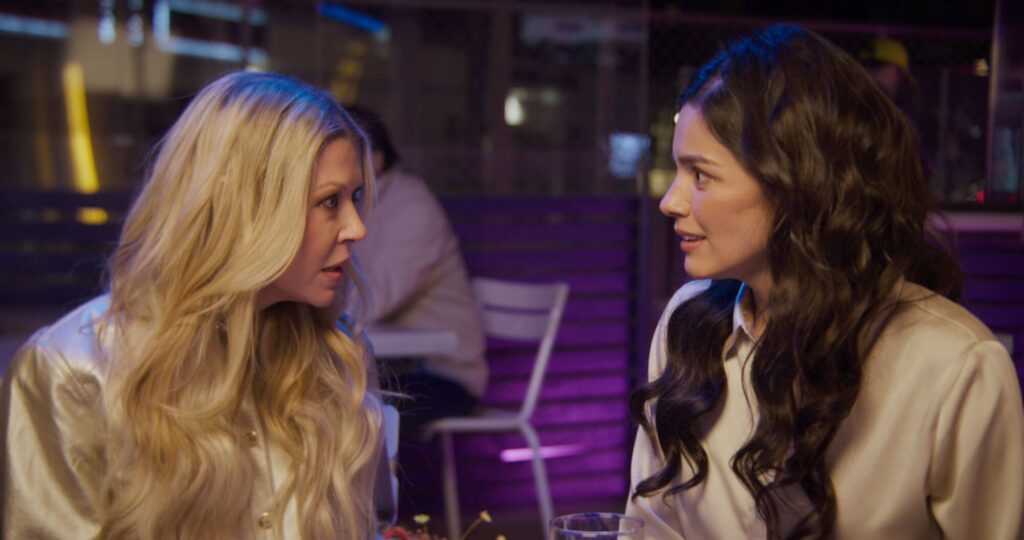
Tara Reid’s performance in particular feels significantly disconnected from the central
story.
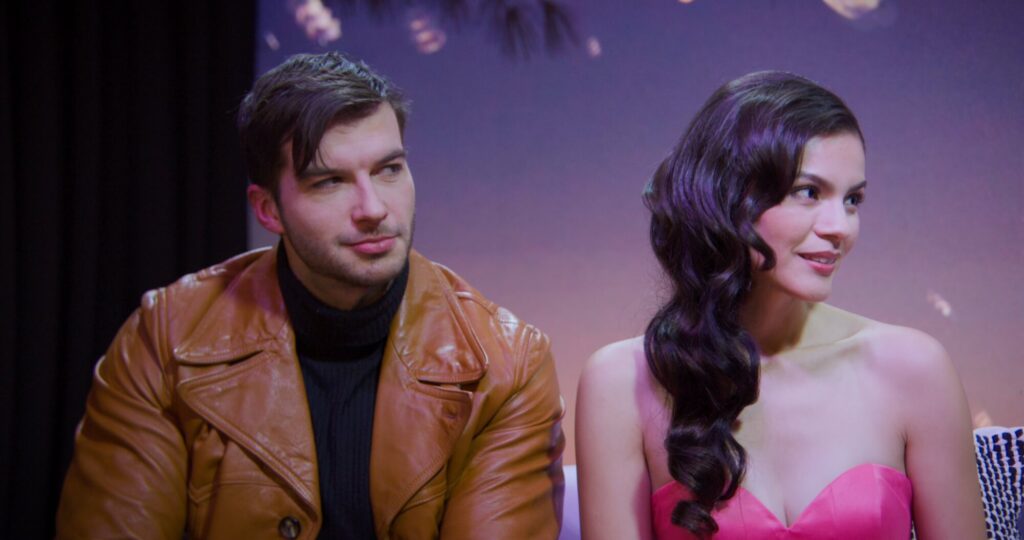
The character development also lacks focus. The film shines brightest when Anakaren
Chablé’s Xochitl takes center stage, especially in relation to the characters of Jonathan,
Paloma, Doña Flaca, and Savino. There’s a natural chemistry that flows through those
scenes. However, when the plot shifts to the multitude of supporting characters, it feels
empty and hollow in comparison. I also found that there were some missed
opportunities to expound on the social commentary the film routinely points toward. For
example, a scene involving Xochitl’s rehearsal with an actor, who references how he’s
been all but typecast in cholo and cartel roles. Considering some of the real-life
parallels to Latino representation in Hollywood, it would’ve been an impactful
conversation to showcase on screen.
The music cues also feel extremely misplaced. Rather than allowing the dialogue or
performances to establish the tone of a scene, the music seems to invasively enter
scenes in a fairly ham-handed way. If something sinister is afoot, the music quickly
shifts to on-the-nose, ominous scoring to emphasize it. The same happens when a
character is reunited with a friend or loved one, and “joyful” music is cued to enhance
the moment. It’s obvious, unnecessary, and it doesn’t do the actors or script any justice.
Across its many incarnations, Cinderella has endured because it understands that true
transformation begins within, not without. The Dreamer Cinderella reaches for that truth
through meaningful representation and a contemporary immigration lens, but struggles
to support its ambition with fully realized characters and performances. While its heart is
in the right place, the film serves as a reminder that even the most timeless stories
require careful craftsmanship to carry their magic forward.
Rating: 5/10