



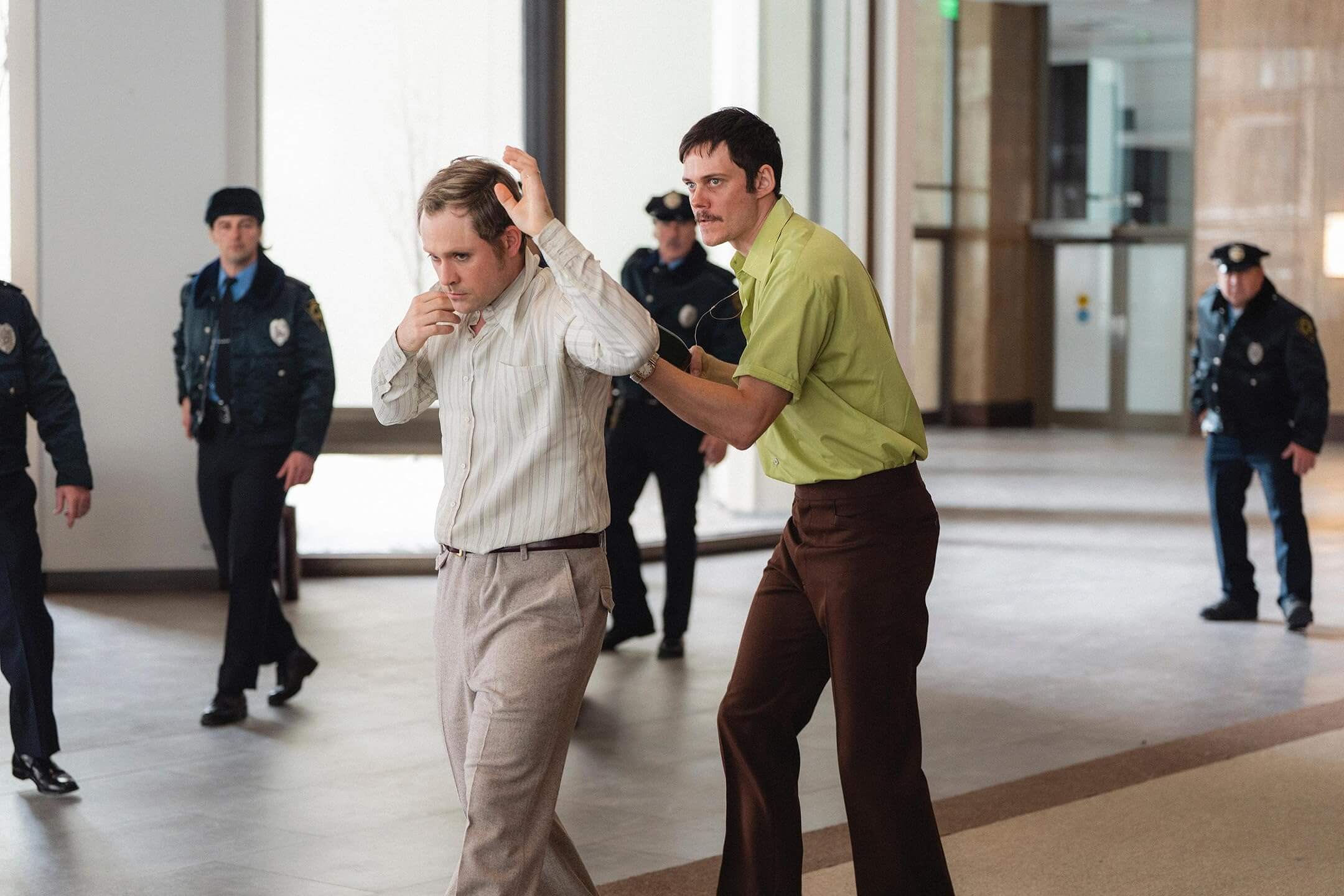
Directed by Gus Van Sant, Dead Man’s Wire is a dramatization of a real-life hostage standoff that took place in 1977, a story that, prior to watching the film, I was not familiar with. The film stars Bill Skarsgård, Dacre Montgomery, Al Pacino, Cary Elwes, Colman Domingo, and more, and exists in a bit of a release gray area. While it received limited screenings and screeners toward the end of 2025, its proper theatrical rollout is set for early 2026. Regardless of where it ultimately lands on the calendar, it is a film that feels very much rooted in its time and subject matter.
The story centers on Tony Kiritsis, a deeply troubled man who takes a mortgage broker hostage by attaching a shotgun wired directly to the victim’s neck. As police negotiators attempt to defuse the situation, the standoff becomes a psychological battle fueled by paranoia, resentment, and emotional instability. Rather than leaning into spectacle, the film focuses on the tension between individuals and the slow unraveling of a man who feels he has been deeply wronged.
Overall, I liked Dead Man’s Wire. I did not love it, but I found enough to appreciate. In full honesty, by the time the film ended, part of me felt that this story might have been better suited as a documentary. As with many true-story adaptations, this is a dramatized version of events, and it is difficult to know where creative liberties were taken. While the film does its job in presenting the story, I could not help but feel that a documentary might have offered more detail, clarity, and impact.
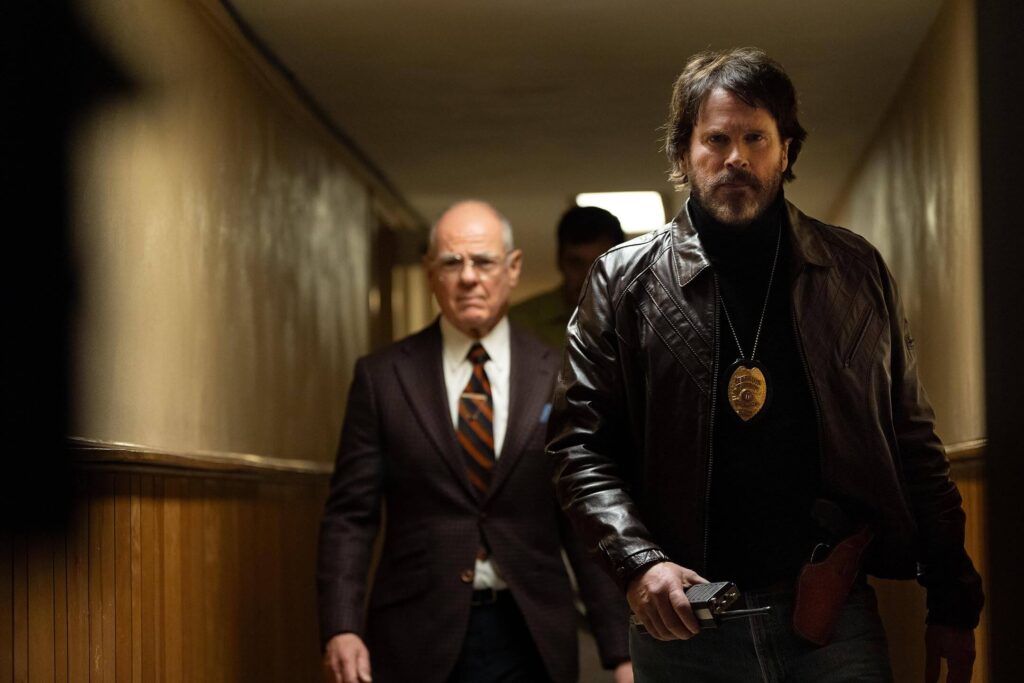
From a technical standpoint, the film is solid. Set in the late 1970s, it convincingly captures the era through costume design, hairstyles, vehicles, accents, and the cadence of dialogue. The cinematography makes effective use of film grain and period-appropriate lighting, helping the film feel authentic to its time. Visually and sonically, it succeeds in immersing the audience in the setting.
The performances are another strong point. Bill Skarsgård is excellent, as expected. He continues to prove his range beyond genre roles, portraying a real-life individual grappling with mental health struggles and a deep sense of injustice. His character’s plan feels impulsive and poorly thought out, which only adds to the tension. Dacre Montgomery is also very good, though his performance relies more on physicality and facial expression than dialogue, as his character spends much of the film in fear and distress. The emotional weight of the film largely rests on Skarsgård’s shoulders, and he carries it well.
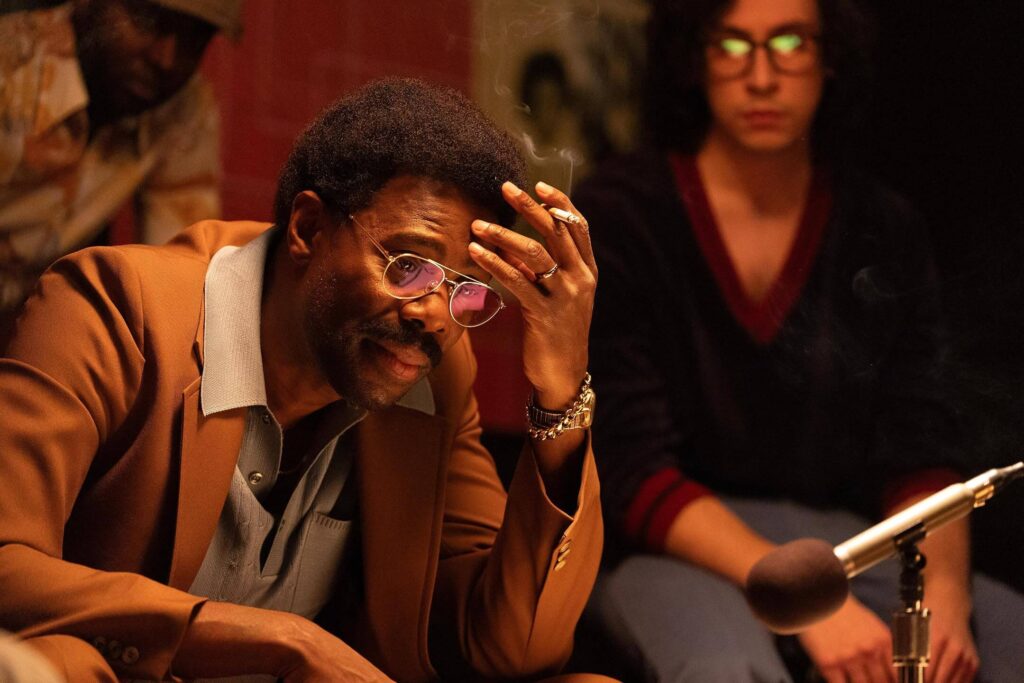
The supporting cast is solid, though somewhat underutilized. Al Pacino appears sparingly as the father of Montgomery’s character, while Cary Elwes and others fill out smaller roles. Colman Domingo stands out as Fred Temple, a popular radio host and the one person Skarsgård’s character insists on speaking to in order to tell his side of the story. Domingo brings charm and presence to the role, but I found myself wishing the film did more with him. This underuse extends to much of the supporting cast, who feel present but not fully explored.
Where the film falters most is in its pacing and narrative momentum. The opening act is strong and immediately engaging, throwing the audience into the situation without wasting time. The tonal mix of tension and dark, quirky humor works well early on and helps establish the mindset of a man who believes he has no other option. However, the middle portion of the film drags considerably. While the filmmaking and performances remain strong, the story begins to feel repetitive and stagnant.
During these slower stretches, I often found myself thinking that the dramatized scenes were less compelling than the real-life events likely were. The film presents sequences of interactions that feel flat and lack meaningful character development. As a result, the emotional connection weakens, and the tension dissipates. The finale does regain some of that engagement, and I remained curious about how things would conclude, but the journey to get there felt uneven.
By the end, Dead Man’s Wire left me with mixed feelings. It is a technically competent, well-acted film that tells an undeniably interesting story, but it does not fully capitalize on its subject matter. I do not see myself revisiting it anytime soon, nor would I rank it among the strongest works from Gus Van Sant or the standout performances of its cast. Still, I think most viewers will find something to appreciate, especially those who remember the real-life event or are interested in true-crime stories from this era.
Ultimately, Dead Man’s Wire is a solid film with a strong beginning and a respectable finish, but a middle section that holds it back from being truly compelling. It left me more interested in learning about the real events than revisiting the film itself, which says a lot about both the story and the limitations of its execution.
Rating: 6.5/10