



by Cyn’s Corner
Dust Bunny was one of the quieter surprises of 2025 — a film that arrived late in the year, slipped through the cracks of theatrical release, and ultimately proved to be a small but memorable genre gem.
Directed and written by Brian Fuller in his feature directorial debut, Dust Bunny carries the unmistakable fingerprints of its creator. Fuller, best known for Pushing Daisies, Hannibal, Dead Like Me, and American Gods, brings a distinctly whimsical yet dark sensibility to the story, blending fairy‑tale aesthetics with unsettling subject matter. That tonal balancing act becomes one of the film’s defining strengths.
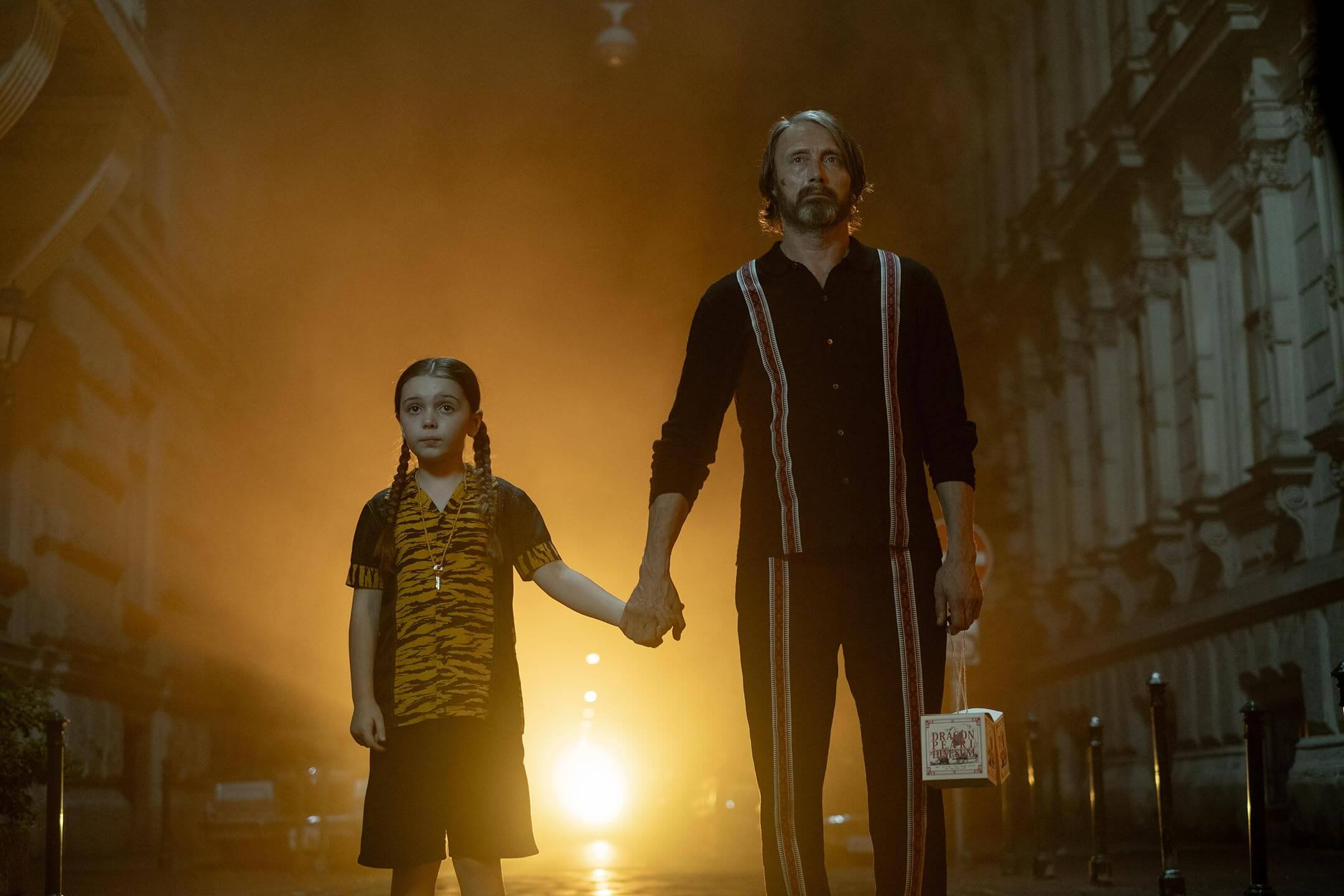
The story centers on a young girl who believes a monster — a “dust bunny” — is living under her bed. After witnessing her neighbor kill a monster of his own, she hires him to eliminate the creature haunting her bedroom. From that simple setup, the film moves into this odd, stylized world where the dialogue, the visuals, and even the behavior feel a little off — on purpose.
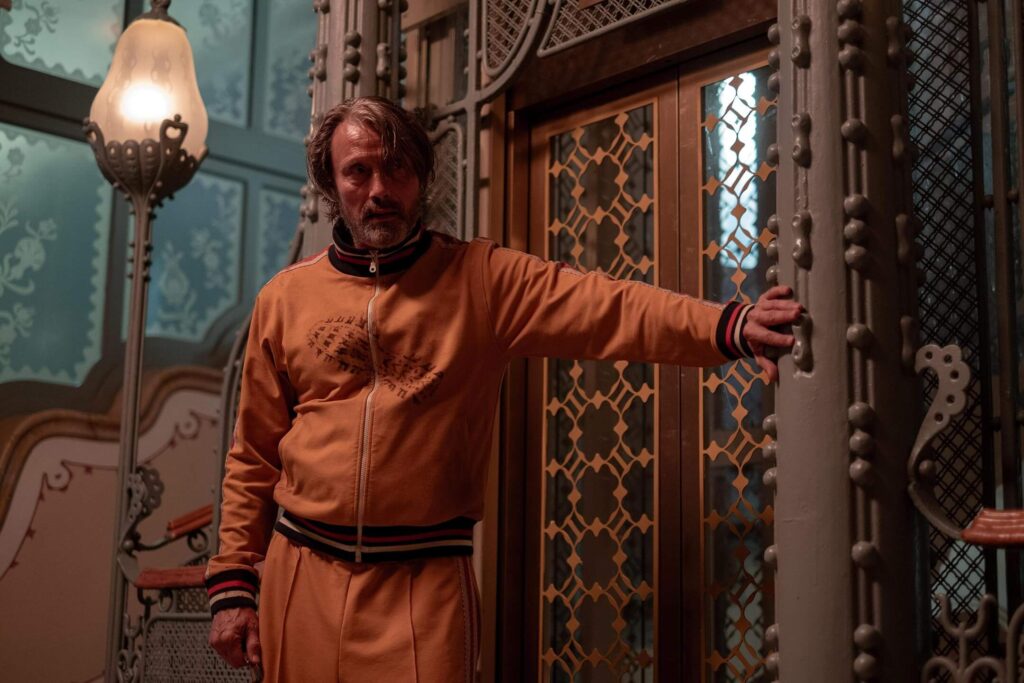
Although the film is set in New York, it never truly feels like a recognizable version of the city. Shot in Europe, the environments appear intentionally artificial and unattached to any specific era. Costumes and set design often evoke the 1960s, while modern driver’s licenses quietly place the story in the present day. The absence of visible modern technology — no smartphones, laptops, or even televisions — adds to the disorienting effect. The result is a setting that feels timeless, dreamlike, and slightly unreal, perfectly matching the film’s fairy‑tale tone.
That aesthetic is reinforced by sharply stylized dialogue. Characters frequently say things that do not quite align with what they mean, creating playful verbal sparring layered with subtext. This approach is especially effective in scenes involving Sigourney Weaver, who steals nearly every moment she appears in. Her banter with Mads Mikkelsen is sharp, witty, and delightfully offbeat, while her interactions with the young girl are laced with both humor and menace.
Mikkelsen’s performance anchors the film. His character — identified only as “Intriguing Neighbor” — is never given a name, an intentional choice that adds to the story’s fable‑like quality. His relationship with the girl is unexpectedly sweet, built on dry humor and cautious skepticism. He does not initially believe in the monster under her bed, assuming something more mundane is at play, while she remains deadly serious. As the story unfolds, fragments of both characters’ pasts are slowly revealed, though never in a traditional expositional way.
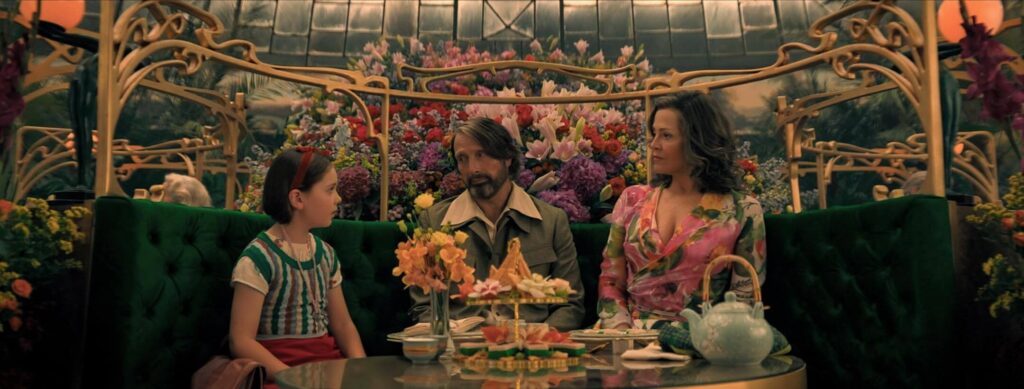
The film takes its time peeling back these layers, allowing meaning to emerge through implication rather than explanation. Most characters are unnamed, including David Dastmalchian’s “Conspicuously Inconspicuous Man,” a detail that underscores the film’s playful approach to identity and storytelling. Fuller clearly trusts the audience to pay attention to subtext and connect the dots.
Tonally, Dust Bunny walks a fascinating tightrope. It’s rated R, but the violence isn’t usually graphic. What really makes the darker moments stand out is the contrast — cheerful music playing during something awful, or characters calmly talking while part of a dead body is highlighted in the foreground. It’s unsettling, but also strangely funny, and very much in line with the film’s offbeat tone.
As the narrative progresses, viewers are encouraged to question the nature of the monster itself. Is it real, or is it a manifestation of something more grounded and emotional? By the film’s conclusion, an answer is provided, though it may not sit comfortably with everyone. While the thematic intent is clear and thoughtfully handled, certain story elements — particularly the rules governing the monster’s behavior — feel inconsistent. The creature’s appearances and limitations do not always align with what the girl describes, creating moments of confusion that may or may not be intentional.
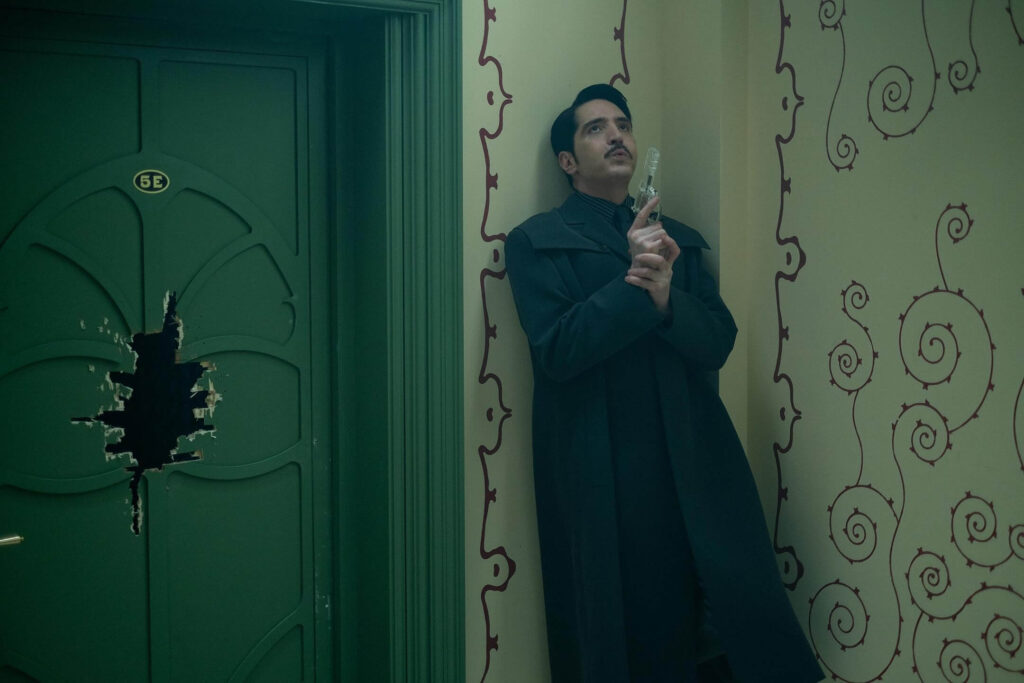
There are a few additional details that raise questions, such as the apparent lack of concern from other residents despite the chaos occurring within the building, or the unclear boundaries of where the monster can and cannot operate. However, these issues never fully derail the experience. In many ways, they may reflect the film’s deeper perspective and the subjective reality through which the story is being told.
Ultimately, Dust Bunny succeeds because of its confidence in tone, dialogue, and design. It is an inventive twist on a familiar trope, elevated by strong performances, a distinctive aesthetic, and a playful yet unsettling approach to storytelling. While it may not resonate equally with every viewer, it offers a rewarding experience for those drawn to stylized narratives and layered subtext.
For a film that received limited attention and a brief theatrical run, Dust Bunny leaves a lasting impression — a strange, charming, and quietly daring entry in 2025’s genre lineup.
Rating: 7.8/10
DUST BUNNY – Available Now on Video on Demand Electronic Sell-Through Street (EST). Electronic Sell-Through SRPs: $14.99 SD / $14.99 HD. Video on Demand SRPs: $9.99 SD / $9.99 HD.