



by D. Movieman
“Listen, and you will realize that we are made not from cells or from atoms. We are
made from stories.”
― Mia Couto
Although the formative impact of films will always be a part of me, I can absolutely say
that literature shaped the lens through which I understand storytelling. After all, long
before I was known as D. Movieman, I was aptly known as “The Bookreader.” Reading
formed my view of the world from the most banal of places—the backseats of cars,
waiting rooms, shopping carts and more. It taught the meaning of self-care and
escapism long before I knew what either term meant. Only years later did I realize that
the stories shaping me weren’t confined to the page.
My mother telling me the first time she met my father at an Indiana Dairy Queen. A
cassette my grandmother kept of me reciting the ABC’s at barely a year old. My
grandfather explaining that my love of the saxophone came from him and my
father—both saxophonists themselves. These and other stories became vibrant threads
in the tapestry of my life. I learned that they held a power that still uplifts me today. It is
that very power that anchors and elevates The Captive (El Cautivo).
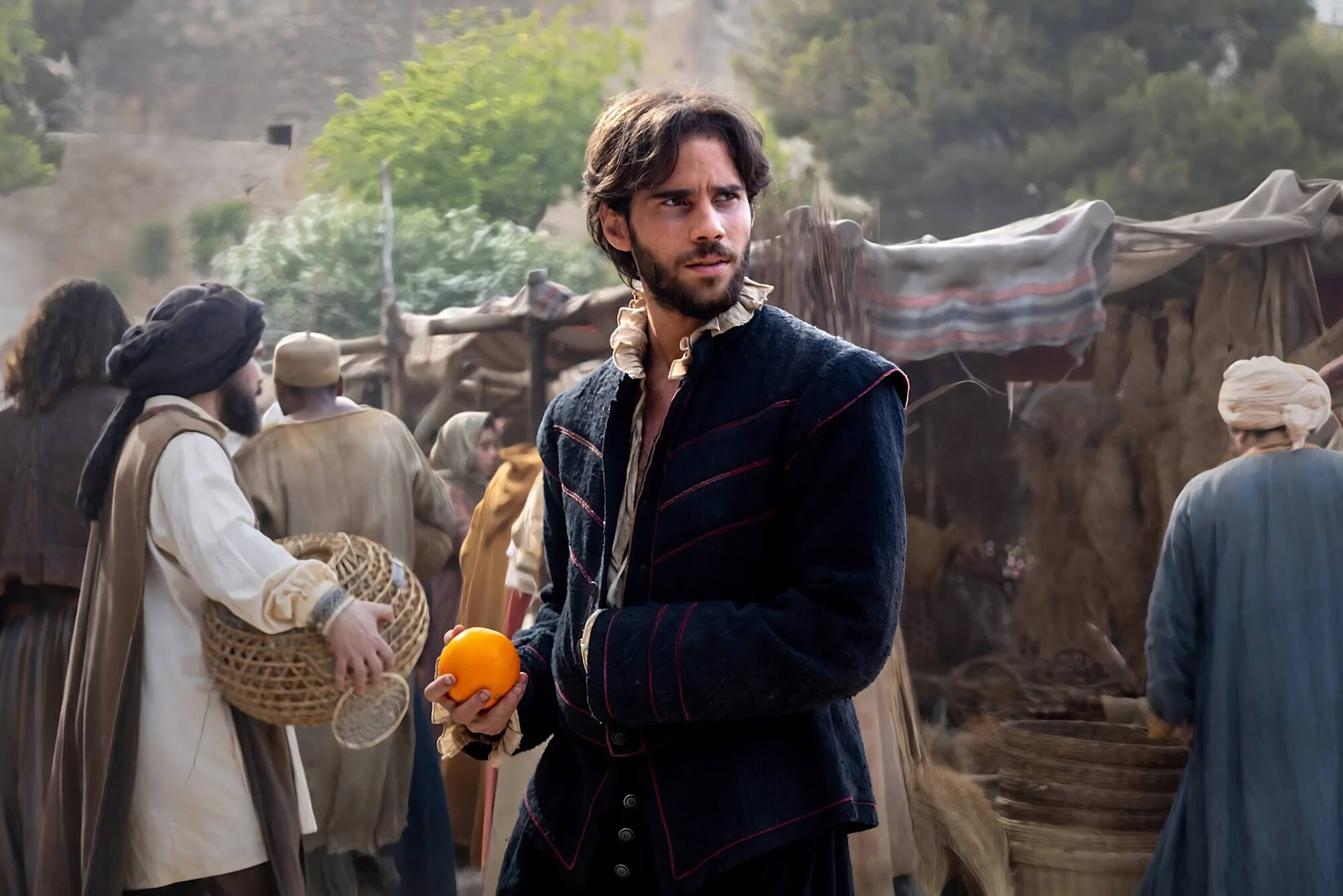
Directed by Alejandro Amenábar, The Captive follows Miguel de Cervantes—future
writer of Don Quixote—amid his capture and imprisonment in Algiers in 1575. Trapped
and hopelessly awaiting a ransom for his liberation, the young soldier steadily develops
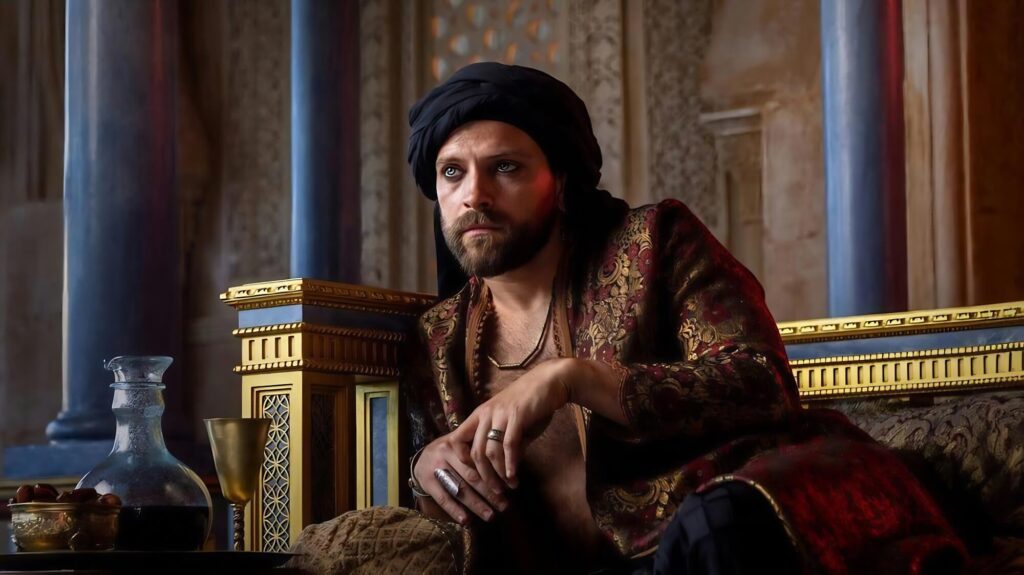
his skills as a storyteller. Directed by Alejandro Amenábar, The Captive follows Miguel de Cervantes—future writer of Don Quixote—amid his capture and imprisonment in Algiers in 1575. Trapped and hopelessly awaiting a ransom for his liberation, the young soldier steadily develops his skills as a storyteller. His stories begin to captivate his fellow prisoners, who find brief refuge in the adventure and vitality of his tales. This talent soon draws the attention of Hasan, the Bajá of Algiers, whose growing fascination threatens to unravel Cervantes’ carefully guarded persona.
The Captive opened my press schedule at TIFF Lightbox, the festival’s flagship venue.
As a first-time TIFF attendee, it served as a fitting introduction to both the festival and its
central theater. A sense of wonder and possibility drove the experience, but the film
similarly captured that spirit. Although set in 1575, The Captive brought to mind the
swashbuckling adventures, exotic locales, and daring escapes featured in classic
Hollywood films. Like Cervantes’ stories, Alejandro Amenábar’s direction imbues the
film with a sense of buoyant imagination.
The production values and costume design are noteworthy, as are the lead and
ensemble performances. Julio Peña Fernández embodies Cervantes through subtle
evolution, as he grows from internal desperation to quiet resistance. Alessandro Borghi
instills the Ottoman governor of Algiers with both fearsome intensity and transcendent
wonder. Moreover, Miguel Rellán as fellow prisoner and future biographer Antonio de
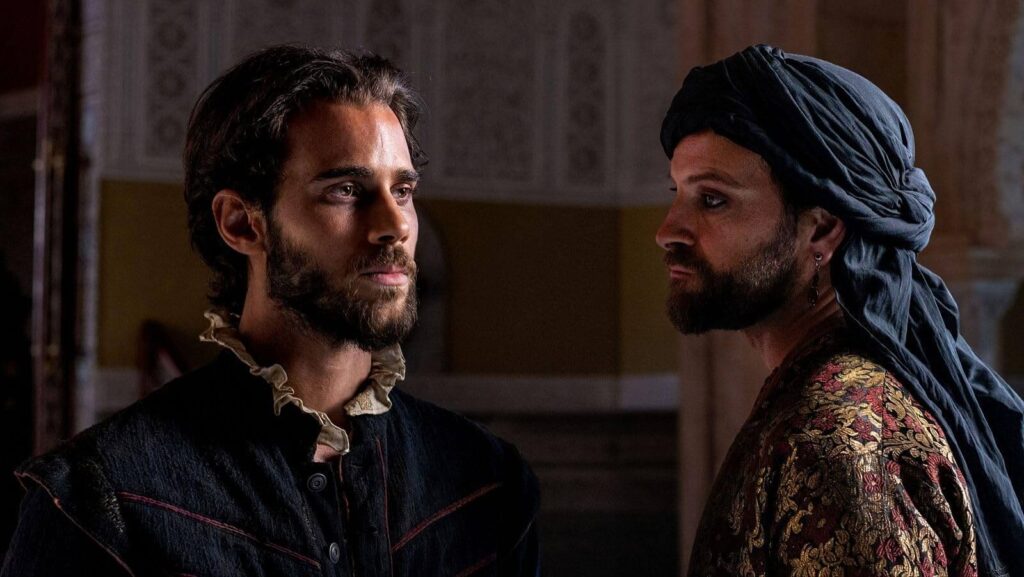
Sosa, lends the film a quiet emotional grounding. While Cervantes and Hasan’s interactions explore storytelling through imagination and ingenuity, De Sosa represents
its preservation through record.
For all its conceptual richness, The Captive stumbles in a couple of areas. While Julio
Peña Fernández expertly portrays the resilience and vulnerability of Cervantes, his
performance doesn’t always capture the full emotional range that the role requires.
His physical presence is regularly emphasized, placing more emphasis on visual charisma rather than the character’s dimension. Another disconnected element lies in the exploration of the complicated relationship between Cervantes and Hasan. While the dynamic between the two is one of the most compelling aspects of the film, its
development is incoherent. It’s established that Hasan’s interest in Cervantes is rooted
in intellectual captivation rather than physical desire. Yet, by blurring these lines to
heighten tension, it inadvertently undermines the foundation of the relationship between
them.
Long before I stepped inside the TIFF Lightbox, I understood the power of storytelling to
transport me beyond the present moment. The Captive is a film that reinforces that truth
with vibrant performances and stunning production design. Moreover, it understands
that stories are a form of liberation, endurance, and preservation. Miguel De Cervantes
could have never anticipated the literary legacy that would follow his captivity. I could
have never imagined that the tales that I loved as a child would become the lens
through which I view the world. Yet the impact remains the same—and it all begins with
a story.
Rating: 8.5/10
Note: This review is based on a screening at the 2025 Toronto International Film
Festival. The Captive does not yet have a confirmed release date.