




by Cyn’s Corner
My Neighbor Adolf completely caught me off guard — in the best possible way. What I expected to be an interesting concept turned into one of those rare films that quietly sneaks up on you and refuses to let go. It’s restrained, thoughtful, surprisingly funny, and deeply sad all at once.
The film opens with a brief prologue in 1934, offering a glimpse into a Jewish family’s life before history irrevocably alters it. That moment lingers long after the film jumps ahead to 1960, where we meet the lone surviving family member, Marek, now living a solitary existence in rural Colombia. His days are quiet, defined by routine and grief, symbolized by a carefully tended black rose bush — a living remnant of a past he can’t escape.

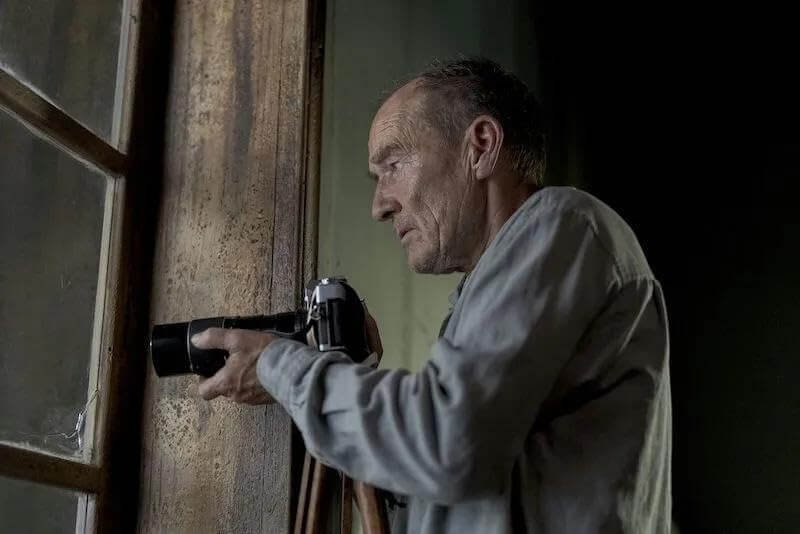
That fragile solitude is disrupted when a new neighbor, played by Udo Kier, moves in next door. The man is abrasive, guarded, and unsettlingly familiar. As Marek becomes increasingly convinced that this stranger may actually be Adolf Hitler in hiding, the film leans into a tense, darkly comic game of suspicion and surveillance. There’s a subtle Rear Window quality to the way he watches, documents, and obsesses, trying to prove what no one else is willing to believe.
What makes My Neighbor Adolf so effective is its tonal balance. David Hayman’s performance anchors the film with immense emotional weight — his grief is always present, often unspoken, etched into every glance and pause. Yet the film never collapses under that sorrow. Instead, it allows humor to surface in unexpected places, sometimes even in moments that feel uncomfortable to laugh at. Udo Kier has described the film as a “tragic comedy,” and that feels exactly right.
As suspicion mounts, something unexpected happens: a tentative, awkward relationship forms between these two lonely men. Their shared chess games become both a battleground and a point of connection, revealing how deeply haunted they both are — though not in the same way, and not for the same reasons. These humanizing moments complicate everything, keeping the audience in a constant state of uncertainty. Just when you think you know the truth, the film pulls the rug out from under you again.
The quiet tension never dissipates, but it’s never exploitative either. The film understands the weight of its subject matter and treats it with care. By the time the story reaches its conclusion, I found myself genuinely wondering how it could end — and more importantly, whether it would stick the landing. Thankfully, it does. The ending is bittersweet, emotionally earned, and feels like the only resolution that truly makes sense.
At under 90 minutes of actual viewing time, My Neighbor Adolf is impeccably paced. Nothing feels rushed or overstretched. The balance between humor, heartbreak, and moral tension is handled with remarkable precision. It’s a film that trusts its audience, rewards patience, and lingers long after the credits roll.
This one immediately landed among my favorites. It’s quiet, daring, and far more affecting than I ever expected — and I can’t recommend it enough.
Rating: 10/10