



Did we really need this movie? I’m not too sure.
The Social Reckoning is the latest film written and directed by Aaron Sorkin, starring Mikey Madison, Jeremy Allen White, Jeremy Strong, and more. It serves as a sequel or spiritual successor of sorts to The Social Network, which explored the founding of Facebook and all the behind-the-scenes drama, starring Jesse Eisenberg. From what I read going in, Sorkin tried to get Eisenberg to return as Mark Zuckerberg, but he ultimately declined because he wanted to separate himself from the role. After seeing this film, I understand why. I can see how the script might not have been appealing to him. This time around, Sorkin is both writing and directing, whereas the first film was directed by David Fincher, with Sorkin handling only the writing. The main question on my mind going into this movie, and even after seeing it, was whether we needed it. The Social Network, especially for its time, was a great film. Social media was still in its infancy compared to where it is now, and there was a lot of ambiguity surrounding Mark Zuckerberg. We didn’t know who he was or much about the creation of Facebook. This movie, however, tackles events that didn’t happen that long ago and were at the center of so much news coverage. While it offers an interesting angle on certain things, part of me kept thinking that it adds nothing to the conversation and just begs the question of why they made it.
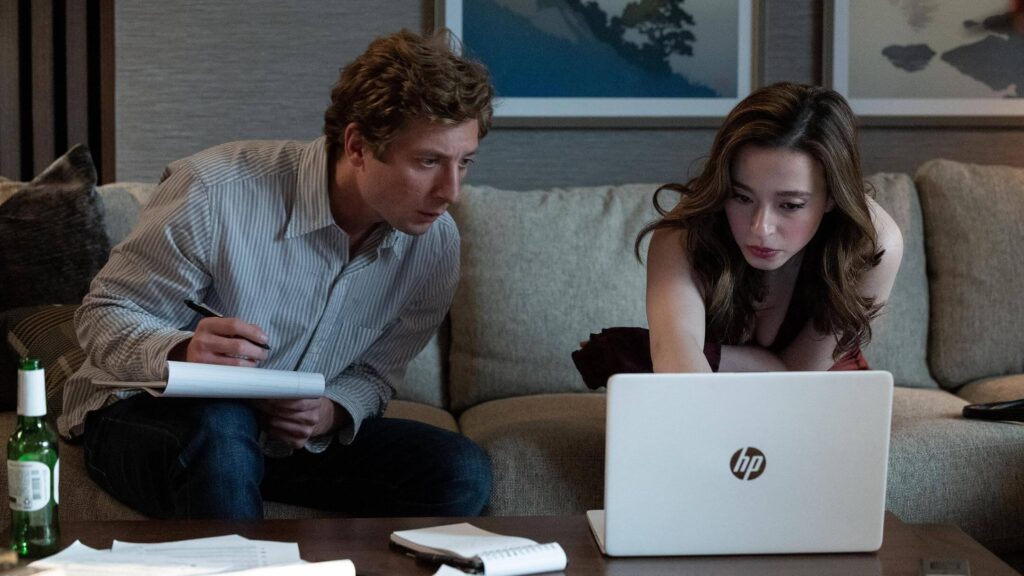
Inspired by real events, The Social Reckoning follows former Facebook engineer Frances Haugen as she teams up with Wall Street Journal reporter Jeff Horwitz to expose internal company documents revealing concerns about Facebook’s practices and the potential harm caused by its platforms. Their investigation challenges one of the world’s most powerful technology companies and raises questions about social media misinformation and corporate accountability.
I did not have a bad time with The Social Reckoning. There are some things to enjoy here. The performances are without a doubt one of the best parts of the film, and it’s a solidly made movie. Usually, when people ask whether we needed a sequel or some random movie, I find myself saying it doesn’t matter. Movies are made all the time, and somebody is bound to enjoy them. I’m sure this film will connect with people who weren’t as tuned in to what was happening with social media and the news over the last several years. But as somebody who was keeping up with these events through online discussions and news coverage, there’s something about this film that feels a little tired, a little one-sided, and ultimately like it doesn’t add much to the story being told.
The movie takes place between 2019 and 2021, leading up to the January 6th insurrection. It has a lot to say about the dangers of Facebook allowing misinformation to spread across its platforms, including Instagram, without doing enough to address it. The Social Network is a completely different kind of film. That movie follows a guy working with his peers to build Facebook into what it would become, with people getting screwed over along the way. It’s a drama, but it’s also an underdog story about a great idea that turns into a huge success. Mark Zuckerberg is presented as a smart kid who either outsmarted people or used his intelligence to create something interesting. He’s a character you can both like and dislike. In this movie, he’s much more a depiction of the person we’ve come to know through the media in recent years, particularly through his television appearances and congressional hearings. He’s robotic in a lot of ways, which has become the subject of countless memes and jokes.
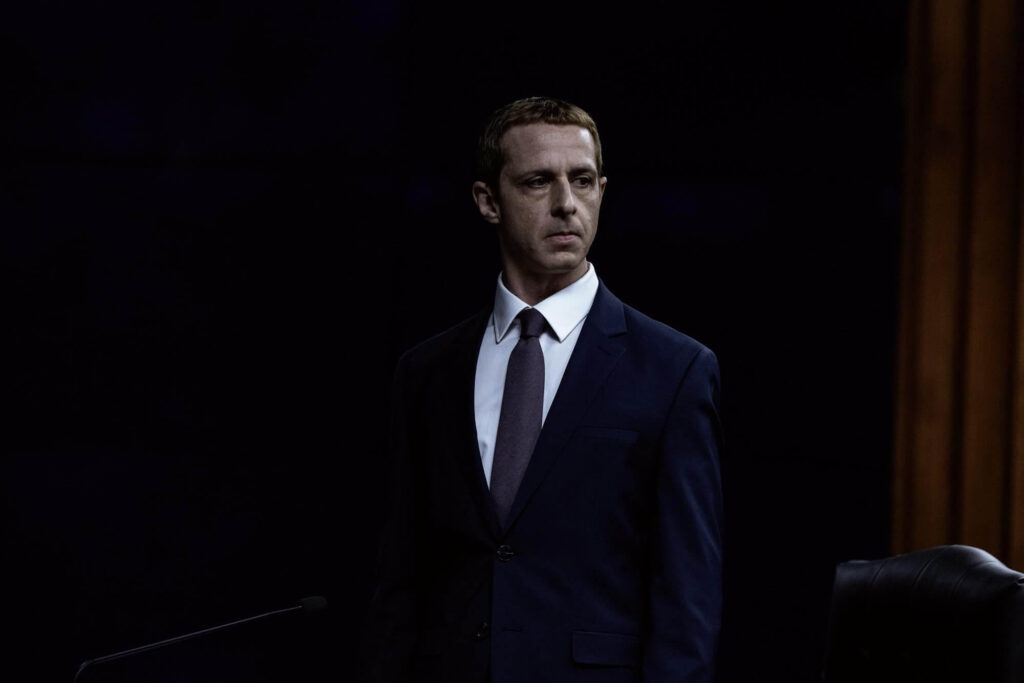
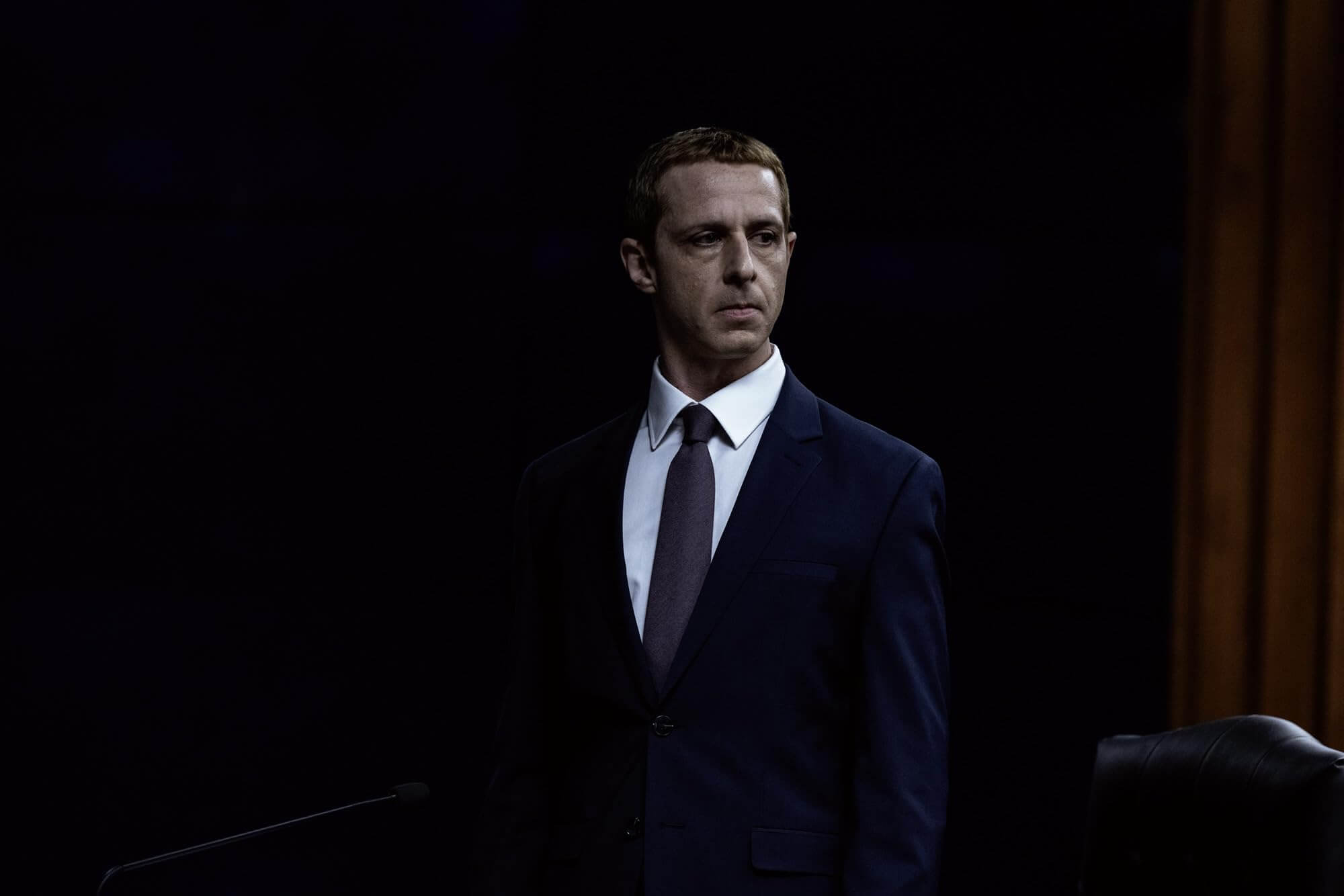
Jeremy Strong does a good job playing Mark Zuckerberg, but he isn’t given much to work with beyond playing a very robotic person. It almost feels like he was brought on to do a caricature of the man rather than bring any humanity to the character. That’s an interesting approach because, even in the first film, there was a sense of humanity to Zuckerberg. He was portrayed as more withdrawn and internal, but still articulate and occasionally robotic in his own way. Here, everything from his mannerisms and the way he speaks to how he looks at his assistants is designed to make him seem robotic and almost reptilian, playing into the way people tend to memeify him. It creates an odd dynamic, because Zuckerberg feels like a passive character in the story even though he’s the reason the story exists in the first place. The movie suggests he simply didn’t care or make an effort throughout the events we see unfold. Even if you disagree with how he chooses to handle Facebook, there’s a strange disconnect watching this as a movie, because they don’t give Zuckerberg much of a character. That begs the question: why make the movie when he’s both the villain and the reason everything is happening in the first place?
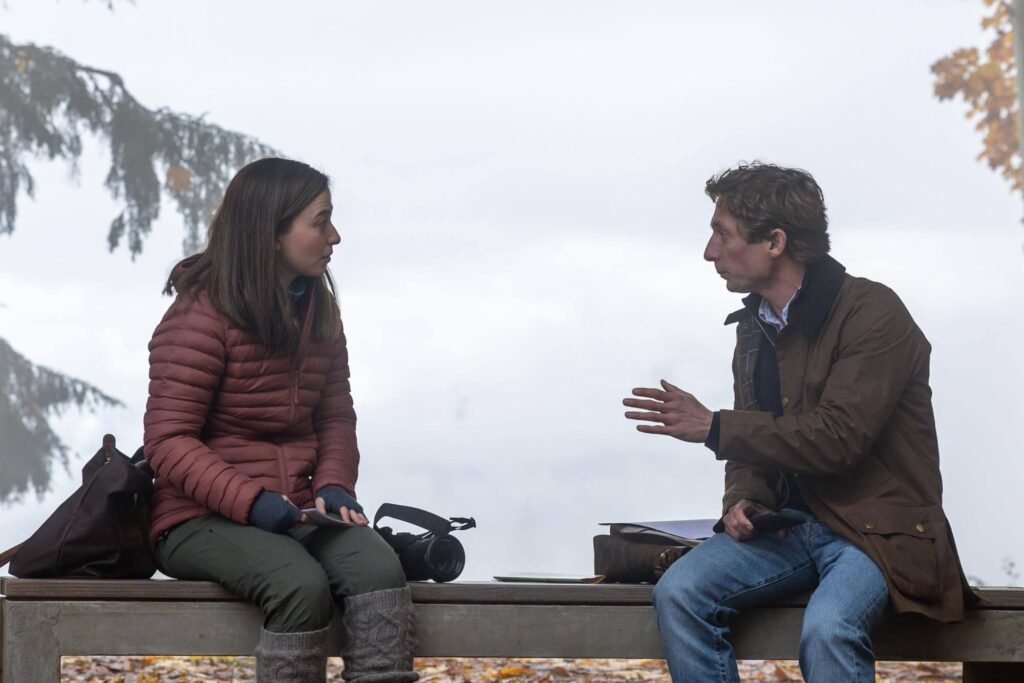
Outside of Zuckerberg, Mikey Madison plays Frances Haugen, a Facebook engineer who becomes a whistleblower and shares internal information with Wall Street Journal reporter Jeff Horwitz, played by Jeremy Allen White. Both of them are great. Of the three main stars, Madison is the one the movie gives you the strongest emotional connection with. You can feel for her journey, what she’s trying to accomplish, and how she’s trying to do right by the people in her life. She still believes in Facebook and what it’s supposed to represent, which is connecting people, but she recognizes that the platform’s algorithms and other practices have contributed to radicalization. Hate groups have grown, and misinformation has created so much discourse that could potentially be controlled if certain content wasn’t allowed to spread. The film touches on free speech and whether Facebook should allow people to post whatever they want or take greater responsibility for regulating content. It’s an interesting subject to explore, and Madison creates a relatable character at the center of it, someone you can root for and believe in.
As much as I enjoyed Madison’s and White’s performances, I keep coming back to my main issue with the movie. We’ve already seen Zuckerberg face scrutiny during hearings and answer questions about these very issues. By the time the movie was over, I didn’t feel much of anything. I didn’t have a strong emotional connection to the story, and I didn’t gain any new knowledge or perspective. Someone who watches this years down the line, or who was too young to understand what was happening at the time, might walk away with a different perspective, but I still don’t think the movie has the emotional core needed to make it a substantial film. Compared to the first movie, they’re not even close in terms of quality, even though they’re completely different films and it’s not necessarily fair to compare the two.
As far as the filmmaking goes, the movie has three solid performances at its center, along with a number of great supporting roles. Bill Burr and Wunmi Mosaku are great as well, and the actors in smaller roles all do solid work. Beyond that, it’s a competently made film. The cinematography, musical score, and editing are all solid, and the movie looks and sounds good. My issues are primarily with the screenplay. Beyond not adding much to the conversation and failing to give me an emotional connection to the characters, the film is also very one-sided in how it chooses to tell its story.
This isn’t the only movie or story in the media that has approached things this way. Both sides have done it. As somebody who doesn’t talk about politics much, but considers himself more of a centrist these days who leans a little left, I think this movie leans very heavily from the left perspective. It almost creates a cringey outlook in the way it goes after the right. Even though there are things in this film that align with my own outlook, the way they’re presented comes across as a little goofy. Even the way the film ends, with a fist bump, feels very try-hard. It left me feeling pretty indifferent by the time the credits rolled.
I didn’t dislike The Social Reckoning, but I can’t say I loved it or even that I liked it much. On Letterboxd, I’m leaning toward a three out of five, which puts it around a six out of ten. It’s a competently made film that gets from point A to point B in a solid enough way. It’s not terrible, and I wouldn’t give it a failing grade, but it’s not phenomenal either. I don’t think it’s going to have the same kind of societal impact as the first film. When I look back at the end of the year, I think it’ll be one of those films that came and went, leaving me thinking, “Oh yeah, they made that movie.” It just didn’t need to exist.
If this movie had come out much further down the line, when we could look back on the 2019-to-early-2020s era with some nostalgia and reflect on the stories that came out of that time, maybe it would have had more impact. Instead, everything is still too fresh in the rearview mirror. If you’re going to make this movie, give us something new: a completely different outlook or a perspective we haven’t already heard a hundred times. I didn’t walk away with any of that.
Overall, The Social Reckoning is just okay. It does what it needs to do, and the cast is doing the best job they possibly can, but I still don’t think it warrants its existence. I just wish it had given me more to think about beyond revisiting events we’ve already spent years discussing.
Rating: 6/10