


Lee Cronin’s the Mummy is written and directed by Lee Cronin and stars Jack Reynor, Lia Costa, Natalie Grace, and more. Going into it, full transparency, I wasn’t super excited based on the marketing. It wasn’t really what I expected when I heard Cronin was doing a new entry in the Mummy chronology, even though I knew it would be its own thing. I still went in with some high hopes because I really enjoyed Evil Dead Rise. That film felt like a return to form for that franchise while still modernizing it, and it was one of my favorite films of the year it came out.
It is also worth clearing up some confusion I’ve seen online. This is not the upcoming Mummy film that Brendan Fraser is reportedly attached to. Blumhouse has even had to clarify that multiple times, but it still seems to be a point of confusion. This film is completely detached from that project and exists as its own separate take.
The story opens in Egypt and follows a family, a mother, a father, a son, and a daughter. Early on, the young daughter disappears without a trace, leaving the family devastated. Eight years later, she suddenly returns, and what should be a joyful reunion quickly turns into something much darker as it becomes clear that something ancient and wrong has come back with her.
I enjoyed Lee Cronin’s the Mummy for what it is. I won’t say I loved everything about it, but it is well executed and consistently entertaining. The audience I saw it with definitely elevated the experience. It was one of those rare theatrical crowds where people reacted at all the right moments, laughing, gasping, and reacting in ways that made the entire viewing feel communal. That kind of energy always changes how a film lands.
This film is also very different from other entries in the Mummy franchise, including the older classics and the Brendan Fraser films. Even going back to the original Boris Karloff version, this feels like a different approach entirely. It is far more of a mix between The Evil Dead and The Exorcist. If you’ve seen the trailer, that probably already comes through. A lot of people have said it feels more like a possession film than a traditional mummy story, and that is accurate.
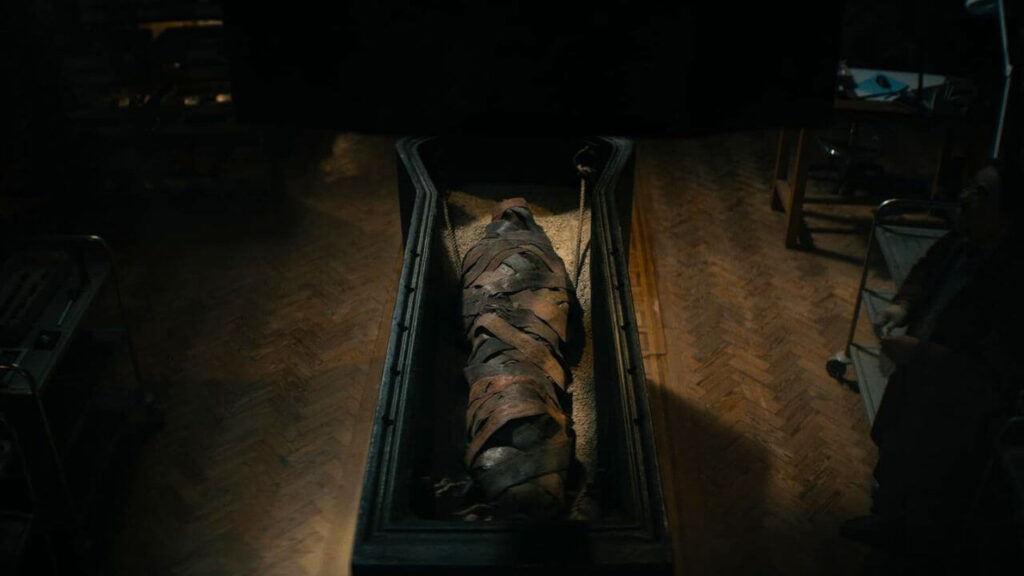
That said, it still leans into Egyptian culture and folklore in a meaningful way. The story is built around why this young girl was taken, mummified, and returned with something inside her. There is a strong Egyptian backdrop that supports the mythology, even if the execution leans more heavily into possession horror. It still qualifies as a mummy film in concept, but in practice it is much closer to a demonic possession story with Evil Dead energy, especially in the final act.
It becomes even clearer that Cronin is working in that lane when the film reaches its final stretch. There is a heavy emphasis on blood, gore, body horror, skin peeling, and all the uncomfortable imagery you expect from something in the Evil Dead style. The entity at the center of it all also has a more over-the-top, chaotic presence that pushes it further in that direction.
Because of that, it does feel like Cronin wanted to make another Evil Dead film and used this premise as a way to do it. Even with a new Evil Dead project reportedly on the way that he is not directing, this film often feels like it is operating in that same space.
In terms of execution, the film does lean on familiar horror beats and story structures. It is not particularly original narratively, but it is competently made. The cinematography stands out immediately. It is lush, carefully framed, and visually strong throughout. There are also visual choices that feel reminiscent of Evil Dead Rise, especially in how characters are staged within the frame, sometimes with one character pushed far into the background while another dominates the foreground.
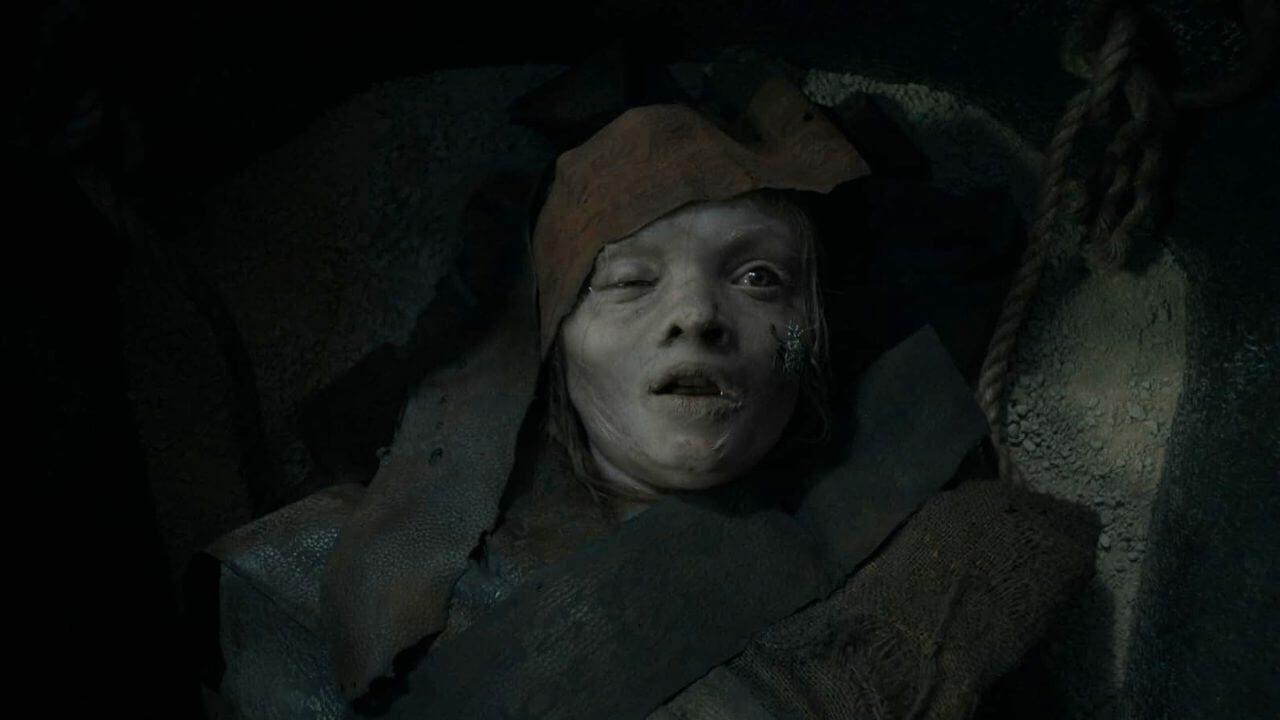
The practical effects are another highlight. The blood, gore, and makeup work are all strong, especially in the design of Natalie Grace’s character, Katie. When she returns, her appearance is genuinely grotesque in the best way for this type of film. It plays heavily into body horror, and it works. The concept of a missing child returning years later, only to have been mummified and altered by something unnatural, is inherently disturbing, and the film leans into that effectively.
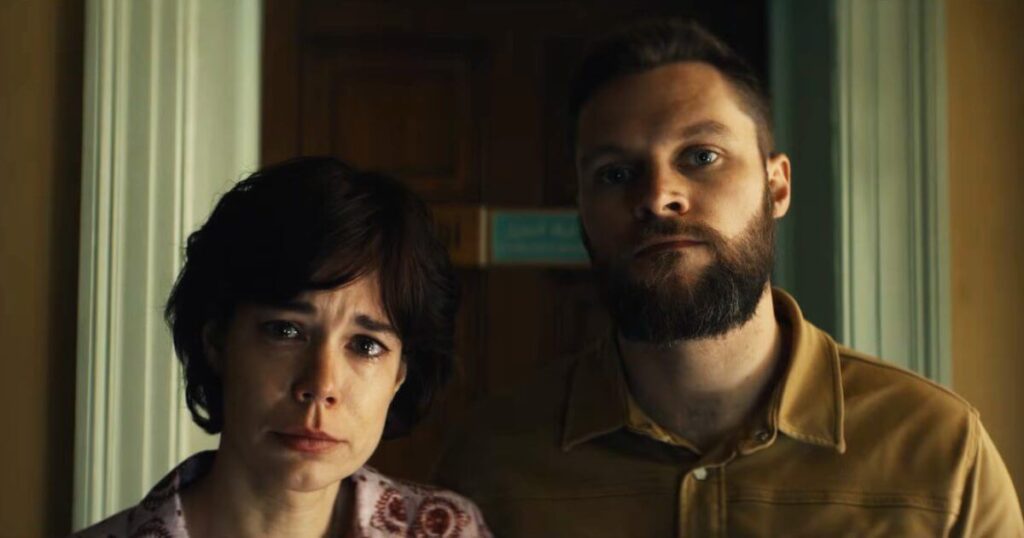
Both Jack Reynor and Laia Costa do solid work as the parents. They sell the emotional weight of the situation and make the family dynamic believable. Reynor, in particular, plays a father who is constantly trying to understand and fix what is happening, even when it is clearly beyond his control. Costa brings a grounded, emotional presence as a mother trying to hold everything together in an impossible situation.

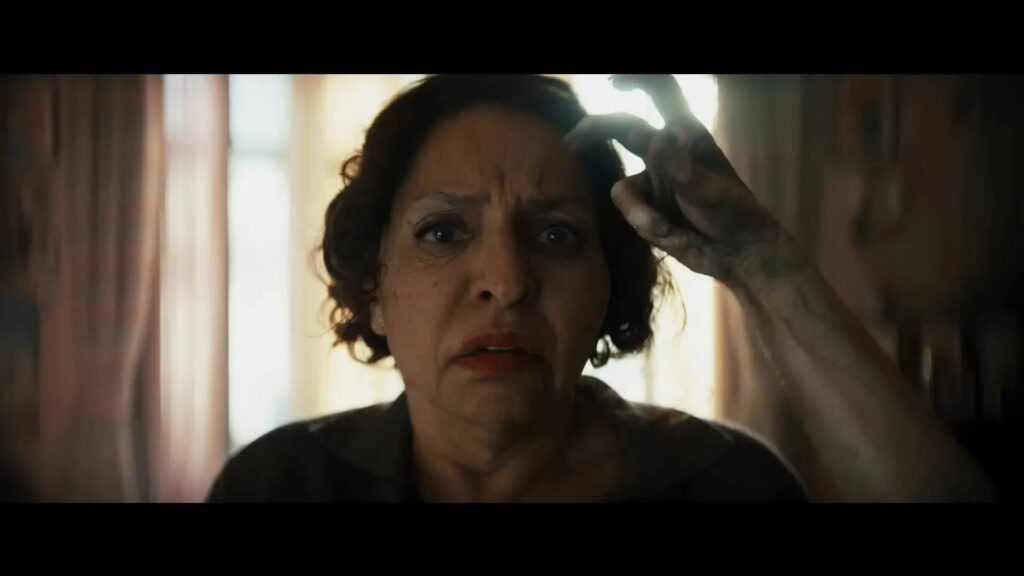
The supporting cast also works well, especially as the influence of Katie’s condition begins to spread to others around her. There is a noticeable escalation in tension as the situation worsens, and the performances help maintain that.
On the technical side, the film looks and sounds good overall. The sound design is particularly effective in the body horror sequences, where every creak, crack, and shift in the environment is emphasized. There are a few moments where the digital effects are more noticeable, especially in sandstorm sequences where the environment feels overly artificial, but those moments are limited.
One of the film’s bigger issues is pacing. The structure splits between Egypt and the United States, and while both settings serve the story, the balance between them is uneven. The Egypt sections are heavily exposition-driven, laying out the mythology and explaining what is happening, why it is happening, and how it connects to the girl’s disappearance and return. While that context is necessary, those scenes are less engaging compared to the more immediate horror unfolding back home.
The domestic storyline, where the possession-like elements escalate inside the home, is much more compelling. Because of that, the shifts back to Egypt sometimes slow the momentum rather than enhance it. It feels like the film needed a stronger way to integrate those two threads so they complemented each other more naturally.
There is also a sense that the film falls into familiar horror tropes. The structure will feel recognizable. A missing child returns. The family tries to understand what is happening. Signs begin to point toward something supernatural. A parent starts investigating ancient folklore and assembling answers piece by piece, only to realize too late what they are dealing with. It is effective, but also very familiar.
Even with those issues, there is still a lot that works. The performances are solid across the board. The production design is strong. The practical effects stand out. The direction is confident. Lee Cronin clearly understands how to build atmosphere and maintain tension, even if the narrative itself does not break new ground.
Ultimately, this is a film that is enjoyable in the moment but not necessarily built to linger. It is engaging, well made, and likely to work well with a crowd, especially for horror fans who enjoy body horror and possession stories. But it does not quite reach the level of something memorable or defining within either the horror genre or the Mummy franchise.
It feels like a familiar framework with an Evil Dead-style coating placed over a mummy concept. That combination makes it interesting, but also somewhat redundant. It works as a viewing experience, even if it does not fully commit to being something distinct or lasting.
Rating: 7/10