




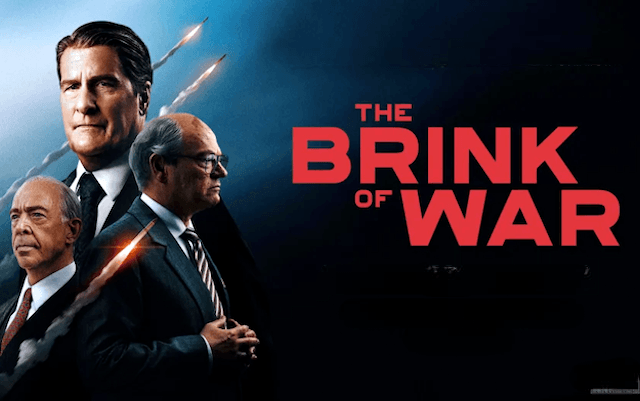
The Brink of War stars Jeff Daniels, Jared Harris, and J.K. Simmons, and dramatizes the 1986 Reykjavik summit between Mikhail Gorbachev and Ronald Reagan. It’s a meeting that’s easy to undersell if you weren’t alive for it: a moment when the U.S. and the Soviet Union were still firmly locked in the Cold War, nuclear anxiety was a fact of daily life, and schoolchildren ran drills that, in hindsight, would have saved exactly no one.
Watching it now, with the benefit of knowing how the Cold War eventually ended, the film carries an odd, unexpected nostalgia – the same feeling I got watching Michael. It’s a strange thing, watching history you lived adjacent to get turned into a character study.
A Film Built on Conversation
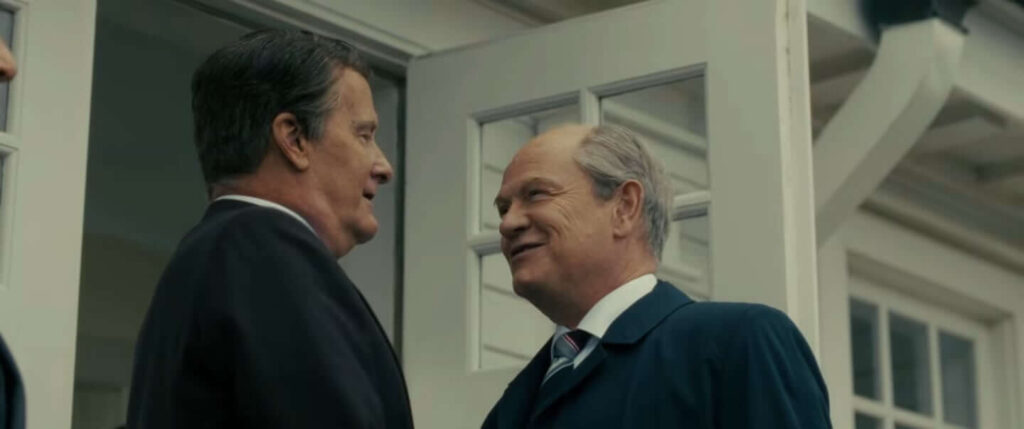
This movie is dialogue first, with little to no spectacle. Outside the central summit, there are brief detours – Gorbachev with his wife, Reagan with Nancy, reporters trailing Gorbachev’s wife, and a CIA/KGB rivalry playing out in the basement of the house like a minor territorial farce. That subplot is clearly played for comic relief, and it’s the one element of the film I could have done without; there’s little indication it actually happened, and it doesn’t add much beyond runtime.
But the core of the film – those extended negotiation scenes – is where it earns its keep. From what I can tell, the film lines up closely with the actual notes taken during the talks, and that authenticity makes the conversational turns land harder. I went in expecting to enjoy this. I didn’t expect to be this absorbed by it.
One detail elevates the whole experience: the production filmed in the exact house, in the exact room, where Reagan and Gorbachev actually sat down together in Reykjavik. That’s the kind of choice that doesn’t happen often in historical filmmaking, and knowing it while watching gives the film even more weight.
The Performances
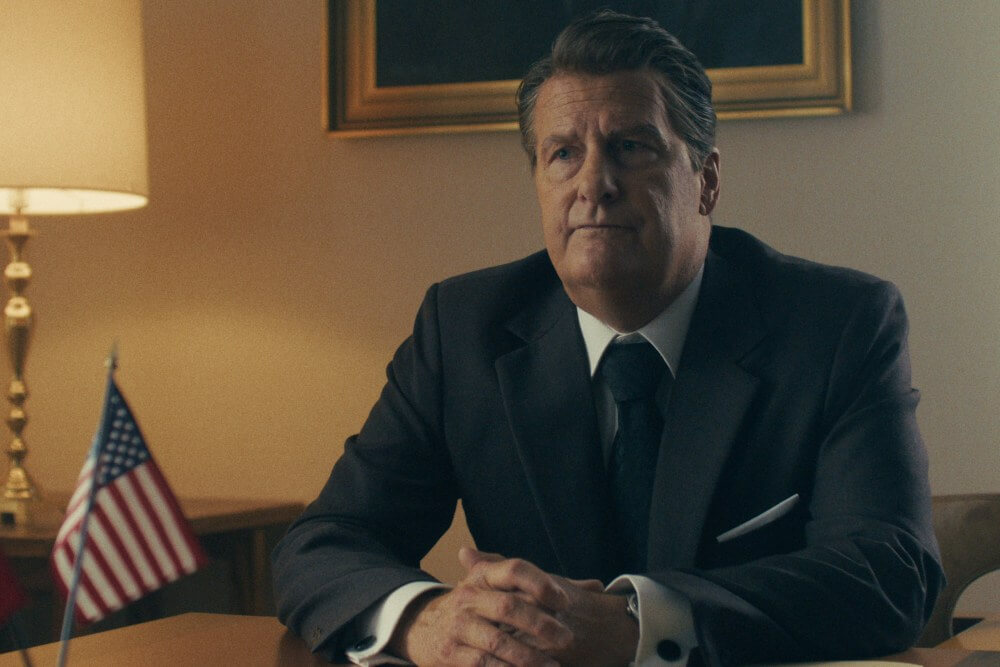
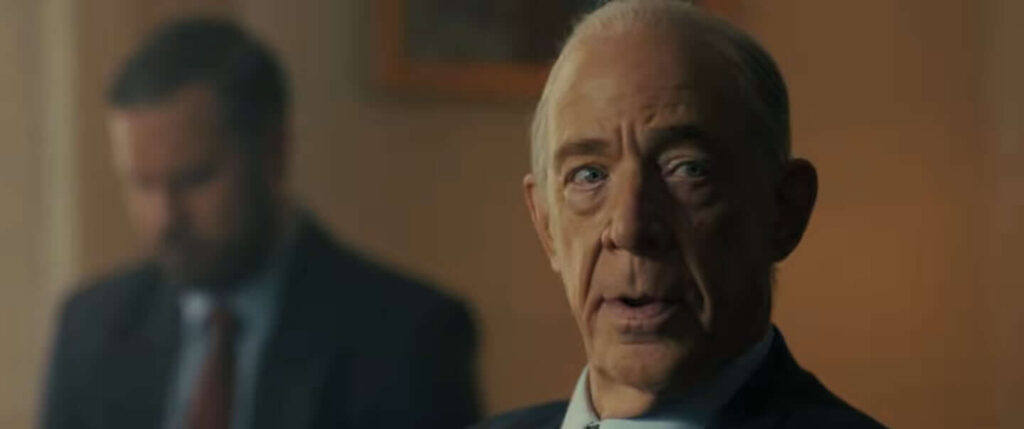
Jeff Daniels plays Reagan, and Jared Harris plays Gorbachev; both turn in genuinely strong, committed work. J.K. Simmons, as always, delivers as Secretary of State George Shultz; there’s a painted portrait of the real Shultz shown near the end, and Simmons’ resemblance to it is uncanny in the small details.
The two leads carry conversations that shift in tone throughout. Sometimes it’s just the two men and their notetakers, and sometimes they’re joined by Shultz and his Soviet counterpart. But the film never loses its grip on the audience despite (or maybe because of) that structure. Honestly, this could have been ninety minutes of the two men talking in a room and I don’t think I’d have been bored once.
Visual Storytelling Worth Noticing
Two visual choices stood out. Early on, during the first Reagan-Gorbachev conversation, the aspect ratio shifts and the two men are framed with a bar splitting the center of the image – a blunt but effective visual indication of the divide between them. It doesn’t last the whole film, just in those first moments.
Later, during a long table negotiation, the empty center of the table visibly shrinks as the conversation progresses – another visual cue, but this one demonstrating that the two sides are inching toward agreement. It’s a small trick, but an effective one, and it’s the kind of detail that rewards paying attention.
Gorbachev, Written With Nuance

One of the film’s smartest choices is refusing to turn Gorbachev into a cartoon villain – an easy trap it avoids entirely. He’s written as someone who genuinely wanted better for his people, with tender scenes alongside his wife Raisa and moments in negotiation where his points land as legitimate, even when you don’t agree with where they’re coming from.
To be clear: I find communism totally indefensible as an ideology. But the film’s restraint with Gorbachev’s character is worth crediting. There’s a memorable moment where Gorbachev, furious, accuses the U.S. of refusing to sell the Soviets milking machines to feed their children. He’s visibly angry, raising his voice, but without a flicker of self-awareness that the shortage was a product of his own country’s economic system, not just American obstruction. The film lets that irony sit without underlining it, and I wish it were something Reagan had pushed back on in the moment.
There’s also a sharp, funny exchange between Shultz and his Soviet counterpart over Americans’ euphemistic term “the football” for the nuclear-codes case – with Shultz firing back a reference to the gulags. I appreciated small moments like that.
Not a “Faith-Based” Film – And That’s Notable
This is an Angel Studios production, and it doesn’t play like what most people associate with that label. Religion enters the story only because it was genuinely a point of contention between the two superpowers (Soviet atheism, restrictions on religious practice, freedom of movement) not because the film is using the story as a vehicle for a faith message. Angel Studios is clearly stretching into new territory, and this is a good example of it working.
The film also treats the dangers of communism and Marxism with real clarity, which feels increasingly rare. There’s a moment where Gorbachev claims Jesus was “the first socialist” – a line that echoes a genuinely popular modern talking point among many leftists, and one that misreads (intentionally?) what Jesus was actually teaching in that context. The film doesn’t linger on it or score cheap points; it’s just there, another example of a man convinced of his own framework and fully ignorant about the person he was referencing in his attempt to make a point.
The two ideas that anchor the film thematically – “trust but verify” (a line Reagan borrowed, fittingly, from a Russian proverb) and “peace through strength” – recur often enough to feel earned rather than repetitive.
What Doesn’t Quite Work
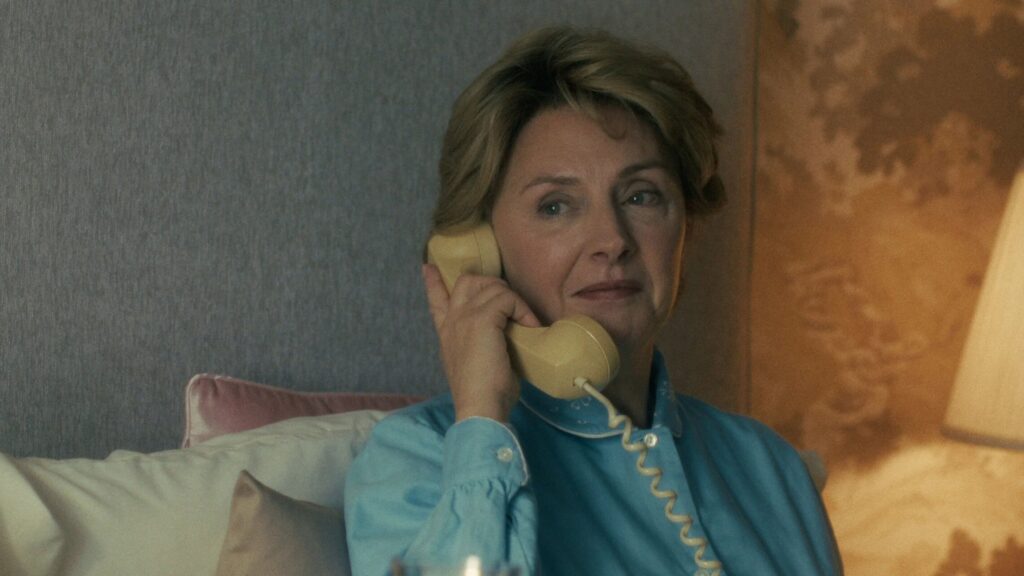
My few complaints are minor. The CIA/KGB basement rivalry subplot feels unnecessary and, as far as I can tell, largely invented for comic relief. Similarly, the subplot involving two journalists trailing Gorbachev’s wife (tied into a minor PR skirmish over Nancy Reagan’s absence) doesn’t add much beyond breathing room between the heavier negotiation scenes. It’s possible these threads exist purely to break up 40 hours of conversation into something more digestible, but neither adds much beyond runtime.
The Verdict
These issues are minor set against the film as a whole. The Brink of War is worth watching for the performances alone – Jeff Daniels’ in particular – and for the seriousness with which it treats one of the more consequential conversations of the 20th century. If you lived through this era, or if you simply love history done with this level of care, this one’s worth your time.
Rating: 8.5/10